Showing posts sorted by date for query tom story. Sort by relevance Show all posts

Saturday, January 31, 2026

The right stuff for a snowstorm binge

A recent pre-snowmageddon visit to the Smithsonian's National Air & Space Museum included the Imax 3D film about the Blue Angels and a planetarium show about asteroids, planetoids, comets, and the technology exploring them.

At the museum, I was most inspired by the films and banners paying tribute to women pioneers of air and space, from Bessie Coleman, Amelia Earhart, and Jackie Cochran to Katherine Johnson, Sally Ride, and Amanda Lee (first female Blue Angel demonstration pilot).

Glamorous Glennis, Chuck Yeager's sound-barrier-breaking craft

All this inspired me to compile a playlist for the upcoming hibernation. I didn't realize I had so many air-and-space and problem-solving women DVDs in my collection, but there it is. 
  • The Right Stuff, which is, as everyone should know, the best movie ever made. (Right, I'm just supposed to say whether I liked it, leaving out "good" or "bad." What do I know?) You think it's about competition: test pilots competing with each other, Americans competing with Soviets, astronauts competing with each other to be the leader of the group and/or the first to ride the rocket. But really, it's about relationships--among men and among women and among men and women. Anyway, as they all figured out, "we've got to stick together on this." The cooperative model wins.
  • Hidden Figures, the story of the brilliant women working behind the scenes for NASA's missions, including Mercury (as in The Right Stuff) and Apollo (as in Apollo 13 and TV's Timeless episode on the attempted sabotage of the Moon landing).
  • Apollo 13, which should have been a logical sequel to The Right Stuff, but for various reasons I was a bit disappointed. Great story telling (working the problem of a crippled craft), but the soundtrack full of angel choirs and soaring emotional crescendos annoys me. But: Tom Hanks, Ed Harris, Gary Sinise, Kevin Bacon. You know.
  • Forever Young, just to jump back in time for more test pilot stuff, plus work toward future space missions via the cryogenics experiment that catapults Mel Gibson 50 years into the future. Also about relationships, Elijah Wood's need to replace his missing father, and some pretty good aerial cinematography. More, please!
  • Deep Impact, launching us into a planet-rescuing space mission to thwart an extinction-level event--a comet discovered by Elijah Wood. Téa Leoni stars as an ambitious cable-news reporter who inadvertently discovers the meaning of E.L.E. Great cast in this film, led by Morgan Freeman as a pre-Barack Obama president and Robert Duvall as the aging astronaut bringing his real-world experience to bear on a younger crew trained on video games. (Competition, again, before cooperation takes over.)
  • An Officer and a Gentleman, again a film about manly competition giving way to the cooperative/supportive leadership model. Great training sequences, including the female officer candidate struggling with physical inadequacy (vis-a-vis the males) but asserting her mental resilience. Really more of a relationship movie (men and men, women and women, men and women). The Cinderella ending bothered me for a long time, but it's iconic now and gets me every time.
  • Top Gun, the original. I should include Top Gun: Maverick for the essential air-and-space training and relationship storytelling, but I don't happen to have it in my DVD library yet. Anyway, I only watch the original because the DVD has a commentary track featuring real flight instructors like my high-school classmate, Michael "Flex" Galpin. Mike's the one telling all the "that's accurate" or "that's not how it works" stories. I especially liked his description of one officer's home decor, which featured an "I love me" wall of photographs. 
  • Contact, so let's get back to women as problem solvers dealing with male competitiveness. Jodie Foster discovers a message from another star system, and Tom Skerritt, whose character tried to thwart her SETI research, steals her thunder and takes her place on the mysterious transport through wormholes. Again, one of the best cast of actors among all these films, including Matthew McConaughey, James Wood, John Hurt, David Morse, Rob Lowe, and Angela Bassett.
  • Courage Under Fire, and I don't care if everyone else thinks Meg Ryan was miscast as a helicopter pilot in the Gulf War. She pulled it off, and with an incredible array of male crew and castmates, notably Lou Diamond Phillips and Matt Damon. Her part of the story is told in flashbacks from different points of view, while the other part of the story is Denzel Washington's investigation of the incident that may or may not earn her a Medal of Honor. Scott Glenn, not incidentally, pitches in as a Washington Post reporter.
  • Proof of Life, returning to the miscast (NOT!) Meg Ryan as a woman whose husband (David Morse) is kidnapped by narco-terrorists in a fictional South American country. She works with a specialist in the kidnap-and-ransom (K&R) business, trained in military intelligence, special ops, and hard-core military machismo. That would be Russell Crowe.
Technically, I could have ended my binge here, but it's still too cold outside. Besides, I noticed something about my playlist: a lot of crossovers in both the cast and characters. This made it essential for me to watch that Timeless episode featuring Katherine Johnson and Silence of the Lambs featuring Jodie Foster, Scott Glenn, Diane Baker, and Anthony Heald.

Here are some of the obvious cross-overs:
  • The Right Stuff - Ed Harris (Apollo 13), Scott Glenn (Courage Under Fire, Silence of the Lambs), Pamela Reed (Proof of Life).
  • Hidden Figures - Katherine Johnson (character, Timeless), John Glenn (character, The Right Stuff).
  • Apollo 13 - Ed Harris (The Right Stuff), Gene Kranz (character, Timeless)
  • Forever Young and Deep Impact - Elijah Wood.
  • An Officer and a Gentleman - Taylor Hackford (director) and David Caruso (Proof of Life).
  • Contact - Jodie Foster (Silence of the Lambs), David Morse (Proof of Life), Tom Skerritt (Top Gun).
  • Courage Under Fire - Scott Glenn and Diane Baker (Silence of the Lambs), Meg Ryan (Proof of Life).
  • Proof of Life - Meg Ryan (Courage Under Fire), Taylor Hackford and David Caruso (An Officer and a Gentleman), David Morse  (Contact), Pamela Reed (The Right Stuff), Anthony Heald (Silence of the Lambs).
  • Silence of the Lambs - Jodie Foster (Contact), Scott Glenn (The Right Stuff and Courage Under Fire), Diane Baker (Courage Under Fire), Anthony Heald (Proof of Life).

Now I might go back to all my Jane Austen productions and other British dramas. Lots of cross-over casting there, notably with Downton Abbey.

Love, hosaa
hibernating

3D ready at A&S


Wednesday, December 31, 2025

Books in review: A 2025 reading list

Expect my usual menu of Shakespeare, Dickens, and Austen (in celebration of Jane’s 250th birth anniversary this year). However, I thoroughly benefited by including a more diverse array of authors, again mixing fiction, nonfiction, poetry, drama, and what-not. (Was there any what-not? I think there was.) The list is largely chronological (by when I read them, not when they were written. Just to be clear).

  1. James, Percival Everett (fiction). One of the best books I’ve ever read (a phrase I’m going to repeat ahead), for its perception, its inspiration, its truth. And I loved Huck Finn, which I will probably never re-read without r-reading James.
  2. The Backyard Bird Chronicles, Amy Tan (nature, art). A favorite storyteller expands her subject and her art. This was an Audubon magazine recommendation, and it’s a treasure.
  3. The Bluest Eye, Toni Morrison (fiction). Another one of the best books I’ve ever read, and I can’t believe I’ve never read it before (a phrase I’m going to repeat ahead). I think back to being a little white girl, not especially privileged but certainly more so than Toni’s youngsters. I would hope I behaved better, but my hometown was what it was at that time.
  4. Fierce Poise: Helen Frankenthaler and 1950s New York, Alexander Nemerov (biography, history, art). Helen is one of the artists introduced in Ninth Street Women by Mary Gabriel and is now one I always look for in my museum visits.

  5. Fail-Safe, Eugene Harvey and Burdick Wheeler (fiction). A character-by-character approach into telling the story. It didn’t really work for me, but I guess that’s because I liked the movie better. Dr. Strangelove, that is.
  6. Lincoln and the Indians, David A. Nichols (history, Civil War era). Historians don’t set out to villainize, but clearly there were a lot of bad guys running Indian affairs for the U.S. Nichols does seem to excuse Lincoln from full culpability, what with his country-saving war and his country-expanding railroad and all.
  7. The Adventures of Curious George, Margret and H.A. Rey (children’s literature). It’s been on my “children’s” shelf a long time. The illustrations are a delight!
  8. The Constitution of the United States and The Declaration of Independence (documents). A good time to catch up, I think.

  9. Einstein: Decoding the Universe, Françoise Balibar (biography, science). You can’t write about Einstein without mentioning the science, but there’s a lot of social history in this (badly designed) little bio.
  10. Fathers and Sons, Ivan Turgenev (fiction). One of my top four Russian novelists, telling a compelling story with some of the social turmoil of the time.
  11. Ghetto Diary, Janusz Korczak (memoir). He saved children and went mad.
  12. The Remains of the Day (re-read), Kazuo Ishiguro (fiction). The butler didn’t do it.
  13. The Guns of August, Barbara Tuchman (history, World War I). A piece of history I’m not very familiar with. An archduke is shot and all hell breaks loose. The historian does not set out to establish villainy, but there are some pretty despicable dudes in this.
  14. Winnie-the Pooh, A.A. Milne (children’s literature). Another one of those books I can’t believe I’ve never read. And the illustrations are delightful.
  15. Man Ray (no author cited), Ediciones Polígrafa (biography, art). Man Ray (is that what friends called him? Or just “Man”? Or “Emmanuel”?) is one of my favorite artists, even when he was not doing Dada. I just think I get more out of art books looking at them than reading them.

  16. Jane Austen: The World of Her Novels, Dierdre LeFaye (history, sociology). A good overview of the novels’ setting in Regency England. I just think I get more out of Jane Austen reading her than reading about her.
  17. The Watsons, Jane Austen (fiction). I honestly don’t remember reading this.
  18. Minor Works (selections), Jane Austen (fiction). The “juvenilia” included Jane’s brief history of English monarchs. She seemed to have no love for Queen Elizabeth I, sharpening her satirical sword on her head!
  19. Invisible Man, Ralph Ellison (fiction). One of the best books I’ve ever read, and I can’t believe I’ve never read it before. I was almost halfway through the story before I realized the narrator was nameless.
  20. Notes from Underground, Fyodor Dostoevsky (fiction). Apparently one of Ellison’s inspirations. As much as I’ve always loved Dostoevsky, I liked Ellison’s story better.
  21. Charlotte’s Web, E.B. White (children’s literature). Another one I’d never read before. Life and death in a tale gentle enough for children to understand the realities of both.
  22. King John (re-read) William Shakespeare (play). Read in preparation for seeing a performance. I still cry when little Arthur dies.
  23. Wild Gratitude, Edward Hirsch (poetry). A fellow Grinnellian’s biography came out this year, but I thought I’d better read his poetry first. Lots of misty, rainy nights prompting reflections of life and love. 


  24. What Jane Austen Ate & Charles Dickens Knew, Daniel Pool (social history, reference). Explanations of much that might baffle you while reading 19th century English novels (not just Austen and Dickens). Keep as a useful reference. (I always thought a “bob” was the same as a pound. No, it’s a shilling.)
  25. Northanger Abbey (re-read), Jane Austen (fiction). Much funnier than I remembered! It would be hard to displace Pride and Prejudice from the top spot, but I now almost have a five-way tie for second place.
  26. Bordering on Madness, Andrew Popper (fiction). I left this on my shelf too long thinking it was some of Andy’s legal writing. It’s actually a ripping-good novel with criminal types and types with criminal tendencies. And a lovely love story.
  27. America’s Future: Poetry & Prose in Response to Tomorrow, Caroline Bock and Jona Colson, editors (anthology). It’s not futurism, except it includes my own essay, “Remembrance of Futures Past.”
  28. The Rubaiyat of Omar Khayyam [partial], Edward FitzGerald, translator (poetry). Just dipping into my ancient edition of Norton’s Anthology.
  29. Mrs. Dalloway, Virginia Woolf (fiction). Another “I can’t believe I never read this before.” A day in the lives of Mrs. D and people in or around her circle. Why does this stream of consciousness work for me when I can’t get a page into Joyce or Proust? I guess I want to live in someone’s house or neighborhood and not entirely in their head.
  30. 1984 (re-read), George Orwell (fiction?). It wasn’t a prediction. It was a warning. Then it became a playbook. 

  31. Killers of the Flower Moon, David Grann (history, 20th century Oklahoma). As we learned from Truman Capote, good journalism tells a cracking good story, and brings history to life better than most textbooks.
  32. The Cider House Rules, John Irving (fiction). Like A Prayer for Owen Meany, this Irving book sat on my shelf for too many years. One of the best stories one could possibly read about abortion, and why many people consider its re-illegalization a crime against humanity.
  33. Rosenkrantz and Guildenstern Are Dead, Tom Stoppard (play). Very absurdist in a Becketty way.
  34. The Cricket On the Hearth, Charles Dickens (fiction). I couldn’t figure out why this is known as a Christmas story, except that it’s sort of fairy-tale-ish, life-affirming, and written for the public at Christmas time like the Carol. Anyway, it was free from the Gutenberg Project and I could read it in a day.
  35. The Obama Portraits (no author cited), National Portrait Gallery (art and artists, the works of Kehinde Wiley and Amy Sherald). Captures a moment in time and what led to it. No such presidential portrait unveilings have succeeded these. And I don’t even want to look in that gallery right now (let alone the one in the White House).
  36. Reflections of a Futurist, Bob Chernow (futurism). Duty reading to remember my former professional life. This English major did learn a lot from working with authors at The Futurist magazine.

In addition to the aforementioned essay I contributed to America’s Future, I got far enough in my DIY piano lessons (Great Courses edition) to write my own little 45-second waltz, Hosaa’s Magnolias: Waltz in C. I wouldn’t subject any readers to a recording of my own playing, but I did create a piece of sheet music by hand. I hope it’s playable.


Love, hosaa
wondering what to read or write next

Saturday, December 30, 2023

Books of My Year, 2023

It was a big year for my Shakespeare reading, only coincidentally because it was the 400th anniversary of the publication of the First Folio. Sundays are always good play-reading days, but I decided at one point to binge the Henrys.
Part one (Spring): Richard II; Henry IV part 1, part 2; Henry V
Part two (Fall): Henry VI part 1, part 2, part 3; Richard III

This is about the extent of my English history, so I’d guess Henry V was pretty much the best king. Also, in Shakespeare’s world, Joan of Arc was a villain (HVI-1). It’s all about perspective.

In addition to the books listed below I read a few magazine stories and poems and, less aesthetically pleasing, reports via PDF (to wit: January 6 Committee, USA v DJT). 

Unlike past years’ readings, I didn’t love everything here. In fact, a couple of things made me question how and why I majored in English (specifically the poetry and prose of Hart Crane, which I didn’t finish). I simply don’t have the mind for high, literary poetry. If I don’t know what you’re talking about, is it really all my fault?

That said, here’s what I read (omitting the PDF reports and stray stories and poems), roughly in chronological order:

  1. The Sky Is Not the Limit (memoir) Neil deGrasse Tyson. Life as a smart, successful, charismatic Black man in America. Perspective matters even when your eye is on the sky.
  2. Romeo and Juliet (play) William Shakespeare. I still think Juliet should have left with Romeo that night.
  3. Living (screenplay) Kazuo Ishiguro. My favorite novelist. The film was quietly moving, emotionally restrained yet draining, like Ishiguro’s other tales. I’d read somewhere that the source material he adapted drew from ...
  4. “The Death of Ivan Ilych” (short story) Leo Tolstoy. Sociology of ambition and frustration. 
  5. Howard’s End (fiction) E. M. Forster. Liberated women and the men they try to save. 
  6. America’s Presidents (biographical portraits), National Portrait Gallery. Good historical primer. As I learned in the Chernow history below, Washington had lots of portraits done. Lots.

  7. The Philosopher’s Stone (quantum physics?) F. David Peat. Oh dear. I loved his other book, Einstein’s Moon. This one went totally over my head, and not in an inspiring, “look up at the sky” way.
  8. Common Sense (political philosophy) Thomas Paine. Very witty. Interestingly, he had no love for the Quakers.
  9. Come Looking (poetry collection) Dan Johnson. I still like the one about the Tastee Diner, but the rest made me want to turn in my English B.A. Huh?
  10. Shadowplay (Shakespearean history) Clare Asquith. Was Shakespeare a propagandist trying to persuade Elizabeth I to go easy on the Catholics? Persuasive survey of the plays in the context of religious, social, and political history.
  11. Utopia (political philosophy) Thomas More. Much like Plato’s Republic, and all “utopias,” really, it’s about structuring the irrational human condition. Is order better than just learning to deal with chaos?
  12. The Gentleman Poet (Shakespearean fan fiction) Kathryn Johnson. An enjoyable romance with Shakespeare himself popping up in a Tempest-like milieu.
  13. Ten Great One-Act Plays (theater) Moliere, Chekhov, Shaw, Williams et al. Since my copy is apparently from my college days, I recognized rereading the one I’d been assigned to perform in class, "Something Unspoken” (Tennessee Williams). I had no idea at the time it was about lesbianism. I guess I’ve always been clueless.
  14. Alaska (travel) Bern Keating, National Geographic Society. It’s a nicely written and photographed travelogue from the 1960s. Educational, too. Did you know Alaska is both the Eastern-most and Western-most U.S. state? 
  15. A Lesson Before Dying (fiction) Ernest J. Gaines. Endurance and dignity. Much in common with the deGrasse Tyson memoir (above). It’s important to experience the world from other perspectives.
  16. As You Like It (play) Shakespeare. I do get some of the comedies mixed up. This is the one with the forest and the girl says something like, “Why talk we of fathers when there is such a man as Orlando?”
  17. Stuart Little (children’s fiction) E. B. White. Some reading from my niece’s bookshelf. Charming, but the ending left me a bit unsettled. I won’t spoil it, though.
  18. The Time Machine (science fiction) H. G. Wells. From my brother’s bookshelf. Better than the movie. The fact that the machine stays in one place and only travels through time satisfies my notions about how time travel should work. I’d rather do it without machinery, but even Quantum Leap’s brain wave transmissions need an accelerator.
  19. The Curious Incident of the Dog in the Night-Time (fiction) Mark Haddon. Experiencing how someone navigates a chaotic (to them) world. Perspective, once again, matters. 

  20. The Adventures of Tom Sawyer (fiction) Mark Twain. Re-read from very long ago. Huck was the more interesting character, but he’s only beginning to evolve here.
  21. Cradle to Cradle (environment) William McDonough and Michael Braungart. All about how to make the sustainable plastic paper out of which this book was manufactured. Truly the most difficult book I’ve ever had to hold in my hands, heavy, inflexible, exhausting. 
  22. Contemporary American Short Stories selections: “Sex Education” by Dorothy Canfield, “A Shower of Gold” by Donald Barthelme. Both good, but show their age.
  23. Beyond Gender (political memoir) Betty Friedan. The occasion of the book is a report on symposiums Friedan had organized in the 1990s, so a lot of this is quoted material. But the post-feminist point is that the whole battle of the sexes thing that mid-century feminism launched missed the point of what was happening to society and the economy. Women weren’t taking jobs from men; corporations were hiring more women so they could pay their workers less. Follow Robert Reich on X/Twitter now. Same thing Friedan was saying. 
  24. The House of the Dead (autobiographical? fiction) F. Dostoevsky. A deeply humanistic look inside an abominable institution. 
  25. Washington: A Life (biography, history) Ron Chernow. Probably not the best employer, but a damn good leader. 
  26. Around the World in Eighty Days (science fiction) Jules Verne. Spoiler alert: There’s no balloon. 
  27. A Midsummer Night’s Dream (play) Shakespeare. It’s all about getting the right lovers together in the end. And Bottom, who wants to play all parts. Ass.
  28. For Whom the Bell Tolls (fiction) Ernest Hemingway. Far more graphically violent than I was expecting after having read A Farewell to Arms last year. But the writing is so good. And a bit mischievous with all the “obscenity” he’d throw in. The bottom line is that the “bell” tolls for all of us; that’s what ties humanity together.
  29. A Life in the Theater (memoir) Tyrone Guthrie. All the names worth knowing at the time. 
  30. The Drawings of Albrecht Dürer (art history) Heinrich Wölfflin. An opportunity to look closely at how lines create shape and volume.
  31. Two Gentlemen of Verona (play) Shakespeare. It’s all about getting the right lovers together in the end.

  32. Mayday (allegory; art) William Faulkner. Faulkner’s original drawings highlight a special edition Arthurian-type story written for a would-be girlfriend. Do you choose death (fame as immortality) or life (dull, unheroic)?
  33. Here at the New Yorker (memoir) Brendan Gill. All the names worth knowing at the time, but unlike Guthrie (above), Gill comes across as a bit smug. 
  34. Incarnations : A History of India in Fifty Lives (collected biographies) Sunil Khilnani. There’s more to the history of India than Gandhi (and the other lives surveyed here really make you rethink your hero worship of the former).
  35. Remember When (Christmas season stories) Clay Aiken, editor, for Bubel-Aiken Foundation (now National Inclusion Project). Earnestly if not professionally written personal memories, some tragic, some comic, and all relatable and human.
Speaking of nonprofessional writing, again, I’ve collected a few more Wordle-generated “stories." Click to open the image in a new tab and zoom in. Thanks for reading!


Love, hosaa
Maybe I’ll just go to the movies next year.

Sunday, February 21, 2016

Visions of Grace at Ford's (The Glass Menagerie)

Dear Edward Duke,

It's been 30 years since I first saw you at Ford's Theatre in your "cheap little show"--then as today the Sunday matinee closer. I still disagree with you that Sunday matinees are the worst houses, for we gave a heartfelt standing ovation to the cast of The Glass Menagerie: Tom Story as Tom Wingfield, Madeleine Potter as Amanda, Jenna Sokolowski as Laura, and Thomas Keegan as Jim O'Connor (aka the gentleman caller).

As proof of this cast's worth (and a concession to your insistence that Sunday audiences are bad), when a cell phone went off twice (yes, the caller called the same phone twice) during a particularly poignant speech of Laura's near the end of the show, Sokolowski held her breath and held the moment and the magic until it was safe for her to continue her speech. GoodNESS! I imagine they all--as you and I would have--wanted to go all Patti LuPone on that "I'm too important to turn my cell phone off" audience member's ass, but they didn't.

Tom, was that one of the tricks up your sleeve? The magic act that actors and poets and playwrights and other dear things rely on to keep us on the edges of our seats, breathless?

Edward, you would have loved Tom Story. Edward, meet Tom; Tom, Edward. As much as I love Tom's comedic roles, there is power in his drama. I'll confess I was tempted to wiggle my way backstage to gush, but my Laura side demurred.

I also wanted to tell Laura that it gets better. I cried when they danced: The gentleman caller sweeps the "crippled" girl up in a sweet waltz and she is suddenly transformed. He gives her a vision of herself as graceful and alive. I want her (and me) to not let disappointment turn into discouragement. It's a delicate balance (oh, wait--that's Albee).

And even if my happy memories of Edward Duke are no more substantial than a glass unicorn, they are a treasure of infinite worth for the joy they brought--and bring.

Happy Anniversary, dear old thing.
love,
hosaa

Friday, December 25, 2015

Saving Mr. Sawyer

Another Christmas adventure for Clarence the Wonderful Life angel. (See also Saving Mr. Potter and Christmas Belle, or: Saving Miss Fezziwig.)

In a dim and foggy corner of almost Heaven, we see a hardworking, earnest agent of goodness bent over his desk. His office space is crowded with filing cabinets and bulging boxes of who knows what, obscured by puffy foggy clouds. His phone rings [Ringtone: Clay Aiken sings "Don't Save It All for Christmas Day"] and he picks up:

"Marley the Ghost! What's your favorite color?" Marley jots down the information cheerfully. "Ooo, good one. 'Rainbow.' Ha! Well, thank you. Got it. And Merry Christmas/Happy Holidays/Season's Greetings and all to you, etc., etc." Marley rips the note from the pad and goes to the array of overstuffed boxes and file cabinets, cramming the new information into a folder and shoving it back into a drawer. He struggles to get the drawer shut again. Through the clouds, he spies two familiar figures leaning in the doorway watching him.

"You're gonna need a bigger metaphor, Mr. Jordan!"

"You may be right, darling Marley," Jordan says with a twinkle in his eye. "These security questions for cloud storage are tedious and overwhelming, but your fellow Earthlings are just trying to protect themselves. We're working on shifting paradigms."

Marley blinks vacantly and notices Angel Clarence by Jordan's side. "Oh, Mr. Clarence, I didn't recognize you!"

Clarence steps into the less-cluttered center of Marley's office. He is no longer garbed in his usual white AngelWear gown with the ruched bodice and sweetheart neckline. Instead, he is wearing a natty charcoal suit with subtle pinstripes, lengthening his lithe figure. "Howdy doody, Marley! It's meeeee!" Clarence twirls, Jordan twinkles, and Marley blinks.

"Our sweet Clarence has earned a promotion," Jordan says proudly. "He is to be your mentor as we send you on your first salvation!"

Marley blinks again. "But I thought I already saved old Ebenezer. That whole time-traveling three-ghost thing was my idea--"

"Now, Biff," Jordan chides. "Don't start taking credit for the work of the powers that Be. Mr. Dickens, as you well know, was the author of that tale. Editors are not authors."

"Yes, Mr. Jordan. I'm sorry, Mr. Jordan. I only meant-- Yes, Chief! At your service!"

"That's better." Jordan shimmers between his two direct reports and angelically wraps his arms around their shoulders. "Now, sweet Clarence, please brief our darling Marley on his rescue mission."

Clarence retrieves a device from his vest pocket, enters his password, and begins scrolling through his apps--Bullies and Belligerents. Egos and Eccentrics. Hubris and Chutzpah. He taps on Misers and Misfits.

"This time of year, it's awfully hard to choose. So many souls left behind," Clarence says with a wan sigh. "I thought this one might interest you, Mr. Jordan. See the similarities with Mr. Marley's old pal Ebenezer?"


"Miss Van Pelt clearly demonstrates an unhealthy love of nickels, nickels, nickels that jingle jangle."

Mr. Jordan reviews the case file uploaded in the surrounding clouds, using a gestural interface activated by the sweep of his grand angelic wing. "Indeed, love of money does have a motivating but not terribly influential pull on this subject," Jordan scrutinizes. "I believe she did have another dearer wish, however." Jordan sweeps his wing so that both Clarence and Marley could see:


"Ah, love!" Clarence exclaims.

"Right, love!" Marley exclaims. "Everyone wants love. Did she ever capture that boy she was so sweet on? What was his name--Schroeder, right?"

Mr. Jordan smiles. "Yes, there was our friend Schroeder. Artistic type, you know." Clarence and Marley blink. "Musician... loves Beethoven." Clarence and Marley blink at each other. "He was the catcher on Charlie Brown's team."

Marley clears his throat. "I'm never sure when you're being literal."

"Not important," Mr. Jordan replies kindly. "Actually, Miss Van Pelt said herself what she always wanted: Real estate. But more than that, her endeavors to attract young Schroeder, to appoint herself the Christmas Queen, to taunt good ol' Charlie Brown with a perpetually thwarted placekick--all these actions demonstrate that she also desired not love, but attention."

"And didn't she get what she wanted? I mean the real estate and the attention?" Clarence asks, sweeping his own wing grandly across the cloudy interface. "I see big buildings, skyscrapers, casinos, and--oh, my, is that the White House? Good-NESS! Our little Lucy became quite the Trump!"

Jordan laughs mirthlessly. "Are you kidding? Lucy sends Trump out for cigarettes."

Marley points at a troubling scene in the Lucy case cloud. "Could I see this part again, please, Sir?"


Jordan embraces Marley proudly. "Yes, yes, my dear soul. Your instincts about human nature are much improved. There is such an overlap in belligerence and hubris, we really need to reorganize our files. Tell me, dear Marley. What made you stop on this episode?"

Marley fishes for his own insights. "Well, it had to do with Clarence's new suit. Vintage Forties. Black and white. Christmas time, too, but with friend Kris involved somehow."

Clarence brightens up and sweeps his wings across the clouds in the room to reveal another tinkerer in the psychiatric arts:


"Sawyer!" Clarence exclaims. "I remember him. Tom Sawyer's great-great grandson. He did have a mischievous streak. Look at him now--a bundle of nerves."


Marley can barely contain his excitement. "Can I help him, please Mr. Jordan? And can I ... can I have a nice suit like Clarence's?"

Jordan smiles and twinkles and waves his grand angelic wings. Clarence and Marley are black-and-whited down to Christmas on 34th Street, nattily attired as befitting businessmen of the day. Marley struggles with an unexpected burden, as he still must bear the chains he forged in life. Thanks to his prior puttings right of things once gone wrong, however, his chains are fewer and lighter than during his Scrooge redemption episode.

As Marley and Clarence enter Mr. Sawyer's office in the famed Macy's department store, Marley's remaining chains clink and clang loudly, startling the mortal.


"Who rang that bell?" Sawyer snarls petulantly. "Can't you read the sign? 'Bell Out of Order. Please Knock.'" Clarence and Marley look at each other in wonder.

"He can't hear us, can he?" Marley asks. Clarence shakes his head. Sawyer continues examining the employee records on his desk, his eyes wandering suspiciously around the room to see where that chain-rattling noise keeps coming from. "Should we appear to him now? I hate all this sneaking around, just showing up in door knockers and what-not."

"You might be right, Mr. Marley. It's your call." Marley nods, and Clarence grandly sweeps his wings to effect the revelation, knocking poor Sawyer in the head. He recovers quickly and squeals with childlike delight upon seeing Marley's chains.

"Oooo!" Sawyer exclaims. "Looky! Well-forged, my good man. Well-forged!" Sawyer hesitantly fingers the chains. "May I? Oh, lovely work. Good stainless, superior nickel content, if I'm not mistaken. Where did you get it?"

"This is the chain I forged in life," Marley intones ghostily. "I'm pretty sure you've got one going yourself."

"Awesome! Well, now, please have a seat. We'll get started with your tests."

Watching from above, Jordan presses pause on the scene. "You need a little more backstory here, dear ones," Jordan whispers. "Observe, if you please, that nervous gesture. What does it tell you?"


"He really needs something to do with his hands," Marley offers insightfully.

"That's IT!" Clarence cheers.

"Yes, indeed," Jordan confirms. He sweeps his wings to change the scene once again to Sawyer's childhood after-school job at the local junk yard.

"That's SCRAP yard," Sawyer corrects. "Wait a minute, who said that?"

Together, Jordan, Marley, and Clarence watch as young Sawyer happily wanders through a large warehouse full of junk-- er, scrap: stuff discarded by a populace flawed by their failure of imagination. "Ferrous, nonferrous, alloys, and fibers! E-scrap and baling straps, and mixed bulky rigids!"

Sawyer reaches into a box of Christmas tree lights, his eyes aglow (behind his protective goggles) with visions of copper cuttings dancing in his head. "Ooo, I know I can make something special out of this. The kitchen for a doll's house, maybe, or the control console on a rocket ship to Mars! Someday, Mr. Macy will buy my repurposed materials-for-toys idea. It's the only sustainable way to future Christmases."

Marley peers over at Jordan's CloudVision screen to peek ahead in the story. "What happened to the young man's dreams?"

"He should have gone to dental school," Clarence mumbles.

Jordan smiles patiently as he angel-wing-swipes the scene again. A cloudy mist obscures a blank slate. "Mr. Marley, my dear, where do we take poor Mr. Sawyer's story from here? No help, Clarence!"

Clarence shuffles his feet in embarrassment, a feeling of helpless incompetence that dissipates as he examines his smartly polished Oxfords with aesthetic appreciation. "There's always cobbling. Or, shoe making, they call it now."

Ignoring Clarence's distracted remarks, Marley thinks a moment. He reviews Sawyer's psychological profile: nervous, fidgety, needing to be correct in the face of strong opposing opinions. And yet, also demonstrating a strong desire to help people, to fix their problems. "The problem with that, though," Marley explains slowly so Clarence, too, could follow, "is he keeps trying to fix things--people--who aren't broken."

"That's right," Jordan says with a sigh. "Mr. Macy saw potential in him, despite rejecting dear Mr. Sawyer's recycled toy idea, and placed him--misplaced him, rather--in HR. This history must be altered."

Marley thinks a little harder. Clarence's offhanded remark about dentistry calls another Christmas story to mind. There was that elf, Hermey, who also felt misplaced in his role, a misunderstood misfit in the toy world.

Misfit. Toys. Misfit. Toys. "Misfit Toys!" Marley, Clarence, and Jordan exclaim as one. "Even Kris would approve of that idea," Jordan confirms.


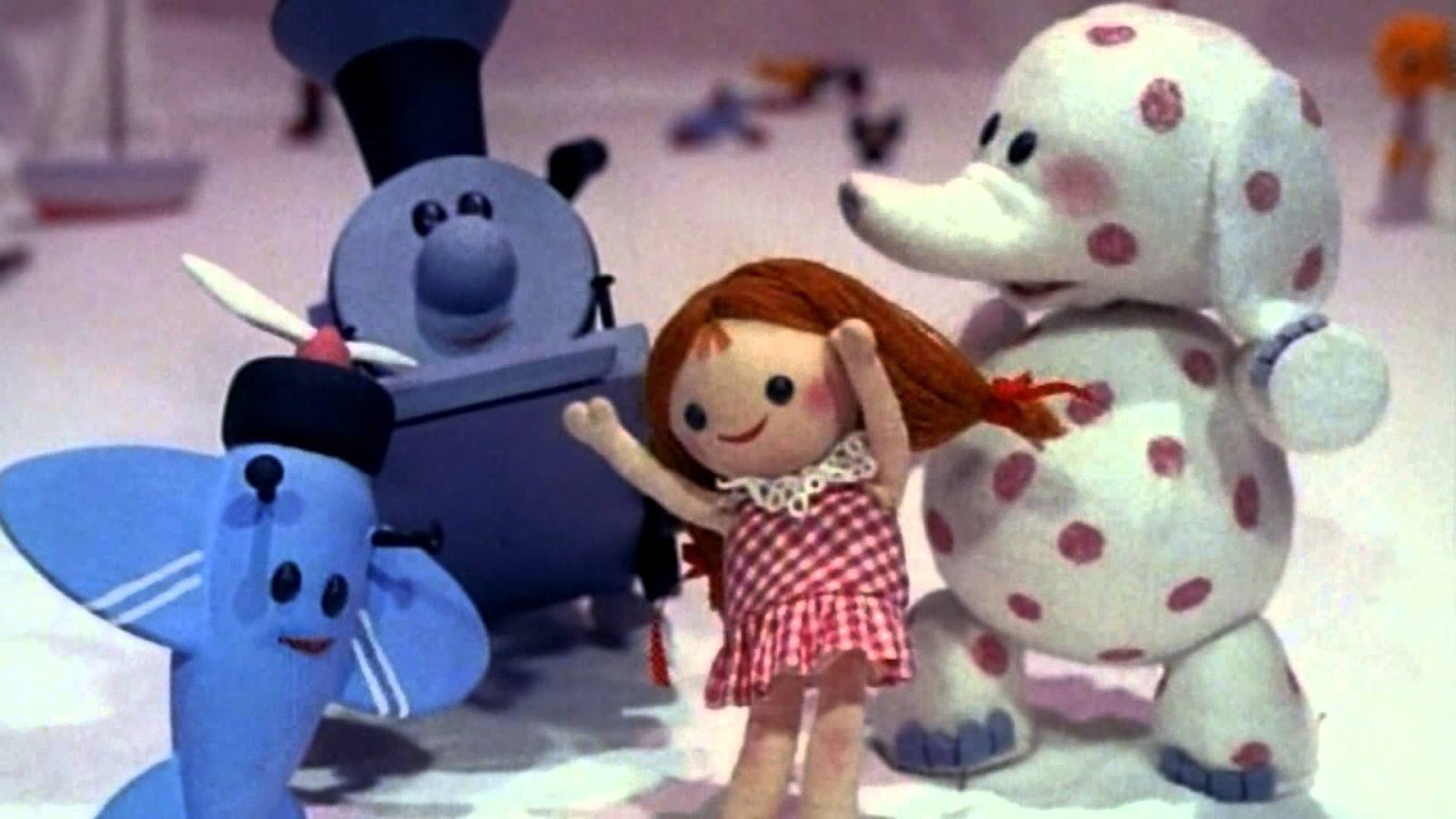
With a group swipe of the CloudVision monitor, the merry gang envision a new future for misguided misfit Mr. Sawyer. He is brought to the Island of Misfit Toys, where the citizens--recognizing his natural gift for materials identification and impulse to fix broken things--name him their Wizard of Refurbished Toys, Deluxe. Times being what they are, he accepts the job.


As the thunderous cheers subside, Jordan returns with his direct reports to Marley's cloudy office, pondering their next mission. As Clarence has noted, there are so many souls left behind in this special time of year. Whom shall we save next?

A face begins to take form in the CloudVision screen. Clarence and Marley anxiously wait to see who it might be... The face is youthful, freckled, and oddly vicious looking.

Clarence gasps. "He has yellow eyes! So help me God, yellow eyes!"

Marley laughs. "Tag, Scut Farcas! You're it."

The End.

Love, hosaa
Repurposing plots


Monday, December 22, 2014

Christmas Belle, or: Saving Miss Fezziwig

Another episode in the continuing adventures of Clarence, the It’s a Wonderful Life angel.

[Related reading: Saving Mr. Potter]

As Ebenezer Scrooge polished the knocker on his door, using the freshly gravy-daubed sleeve of his day coat as a Handi-wipeTM, Clarence beamed stupidly at the cloudstreaming vision of this oft-told tale.

“Oh, I just love it in high-def,” Clarence chirped as he stood up and stretched, “especially that little wink the knocker gives old Ebbie after he’s gone in and shut the door again. Tell me, Joseph, what’s your favorite part?”

Joseph was getting used to his doddering companion’s chronic cluelessness and patiently explained that effecting a miser’s spiritual resuscitation by loosening his purse strings for a day really wasn’t such a hard trick.

“It’s quite the roasted chestnut, really, as you can tell by all the versions there are,” said Joseph, helping Clarence tug down on his ivory fit-and-flare AngelwearTM to cover his fuzzy ankles. “Goes to show you what happens when you let your copyright expire. I’ve never understood the message, though,” he confessed.

“If I may,” Clarence offered, “it’s that you can buy love, am I right?” He delicately fingered the satiny fabric crisscrossing his clavicle. “Oh, I don’t like the sweetheart neckline so much, but it’s all they had when I got my promotion.”

Thunder clapped, as godly thunder does, not in applause but in appalled approbation.

“Oh-oh,” Clarence whimpered. “Um, I am in trouble again, am I not? Here Comes Mr. Jordan©.”

Jordan lightly pirouetted (a quadruple, no less) before presenting himself before his airy intern.

“Ah, dear Clara, how comely you are in ivory,” Jordan sighed with a merry purr.

“Clarence!” cried the intern. “Clara’s that Nutcracker© girl.”

“Ah, yes,” Jordan said, squinting at the odd bridal form before him. “It’s that Magoo© version, you know. I empathize a little too much. [In his best Jim Backus] Ah, Jordan, you’ve done it again!”

Joseph struggled to retain his relevance in the plot, for he usually has little to do or say at this point in the Jordan viz. Clarence proceedings. With a wiggle and an ahem, he succeeded in catching his supervisor’s squinting eye.

“We were just discussing the moral of the story, Mr. Jordan. I’m afraid that Clarence, here, was under the impression that Mr. Scrooge lived happily ever after.”

Mr. Jordan’s twinkly eyes grayed with sadness as he replayed on the Sony® CloudstreamTM the scene of our dear hero, having emptied his personal cash boxes to treat the neighborhood to Christmas dinner, returning to an empty home.

“Tsk, tsk, tsk,” Mr. Jordan tutted. “It’s a shame that you never got past Tom Sawyer in your literature assignments, my dear Clarence. You really should have stuck with Dickens all the way. There’s Bleak House and Oliver Twist, for instance—so much more to say on capitalism and social inequality and its consequences. But no, you left it to Piketty and such to have to show where things in the nineteenth century all went hoo-hah.”

“But Tom Sawyer did show picketty fences and how to whitewash them,” Clarence protested.

“That little Machiavellian fool,” Jordan sneered. “His friend Huckleberry was the true moral touchstone in Twain.”

Joseph helpfully wiggled and ahemed again to rein the plot that threatened to gallop away.

“Thank you, Joseph,” Mr. Jordan said, adjusting his own posture to something more professorial and Mr. Chips©-like. “Clarence, my good fellow, I am sending you on another assignment. Now, tell me, whose soul has been left behind in this Carol? What lives were omitted when, thanks to the protocols of serial publication, narrative momentum prevailed over backstory?

Clarence sat down again, hiking up the tulle poofery around his ankles, and scratched his shaggy head. These actions in no way facilitated his imagination.

“Let me think, now,” he thought aloud. “That poor clerk, Cratchit, got a raise, check. Tiny Tim, affordable health-care subsidy, check. Oh, and I saw that old Jacob Marley was brought up the other day, thanks to his brilliant Ghosts of Christmas Past, Present, and Future® thingy. Good job, well done. I should go and pay him my compliments, should I not?”

Joseph glanced back over his shoulder to the holding room and reminded Mr. Jordan that Marley’s new hearing date had yet to be determined. As even Clarence now understood, spiritual missions are rarely so black-and-white, cut-and-dried as the storytellers would have us believe.

“Marley, then?” Clarence attempted. Joseph bowed his head in silent prayer for Clarence’s wit.

“Old Jacob Marley,” Jordan explained wistfully, “was not just Mr. Scrooge’s partner; he was his role model. And for that, he has much to account. However, though this episode shall retain his services, he is not our particular interest. Please, darling Clarence, think a little harder. Why are you wearing the bridal AngelwearTM?”

“Maybe if we’re dropping hints, we need more than some lacy tulle,” Joseph joked feebly.

Clarence began to feel the hint clamoring to his beaded bodice, and an expression not unlike a bride’s glow spread across his crinkly eyes.

“Oh my, my, we forgot the leading lady, didn’t we?” Clarence said at last. “Scrooge was in love, engaged to be married. What happened? I hardly remember that part. She said he fell in love with a golden idol, and then she dumped him. What happened to her? And how come he became so miserly in the first place?”

“Great questions, very astute,” Mr. Jordan praised. “Why don’t you go and find out.” As rhetorical questions often are, Jordan’s last was answered with a scene-changing wave of his wings, accompanied by his cherubic, Crest White Strip®-enhanced smile and a little less-aggressive thunderous fanfare.

Stepping out of the Wayback Machine®, Clarence instantly recognized the scene of Ebenezer Scrooge’s Christmas Past, the schoolroom from which his beloved younger sister, Fanny, had once fetched him home.

“Didn’t we go too far back on this?” Clarence muttered upwardly to Joseph, whom he knew was watching over his progress. “Fan is the sister, not the fiancée, right?”

“Hush, now, and just watch,” Joseph responded in a voice-over. “Follow them when they go, instead of following Ghost of Christmas Past and the old man.”

Clarence felt a bit proud with this discovery of the powers that angels have versus simple post-mortal ghosts. Sure enough, as GoCP left the scene, with the nightgowned, sleepwalking Mr. Scrooge in tow, Clarence was able to follow the younger schoolboy, Ebbie, who hopped into a one-horse open sleigh©-hey with Fanny and headed home.

With a Quantum Leap©-like wave of his bedazzled AngelwearTM Wing-a-Ding WingTM, Clarence accelerated time and place to the Scrooge family homestead, finding the patriarch pacing gloomily in his shabby study. The cold room and its furnishings, books and all, were coated in a thin gray veneer, which could have been either dust or hoarfrost, or both at once. The elder Scrooge welcomed his darling daughter with a warm embrace, burying his own tear-stained cheek on her Killer Rabbit®-trimmed cloak.

“Don’t cry, dear Papa, I’ve brought our Ebbie back home! He’ll cheer us with a song and a story, and he tells King Arthur’s Tales of Spamalot© so awfully funny! We’ll laugh and laugh and be oh so merry again!”

To his only son and heir, Scrooge Sr. offered a dignified but chilled and chapped handshake.

“Ni!” Ebbie offered feebly, to his father’s indifferent confusion. There was a generally awkward clearing of throats among the room’s population of Scrooges.

“Fan,” the father said to the merry child, “please go and tend the Jell-O® pudding. There’s a good dolly. We men have business to attend to.” Though wincing at the belittling epithet, Fan obeyed.

When the young female was safely removed from the scene of manly business, Father Scrooge grabbed a threadbare blanket off the back of a side chair and dusted off a spot for Ebbie to sit upon. The chill that met the boy in the seat of his pants moved rapidly through his heart and fed broken ice chips to his very soul.

“Ebenezer,” the father began hesitantly, “are you prepared to leave the fantasies and games of schoolboys behind?”

“Yes, Father,” said our heroic young liar.

“Remarkable boy,” old Scrooge mumbled thoughtlessly to himself. “Eb. Ebbie. Ebenezer. The truth is, you and your cherished sister are my only remaining … assets.”

Clarence could feel his face mirroring the confusion he saw on young Ebenezer’s countenance, a mix of disbelief and dismay, with a touch of sullen foreboding. The father continued, his melancholy voice leaving frosty echoes in the silent room.

“I find I must sell you both, and for a price unworthy of either of you.”

“What do you mean, sell, Father? What can you mean?”

“You are a clever boy, er, man, my son, and quite accomplished with your ciphering, your masters tell me. Here,” the elder Scrooge said, handing a ledger to his incredulous son. “Look through these pages, and tell me what you see.”

Young Scrooge did, indeed, have a gift for numbers and could see at a glance that his father was a financial moron. The red ink spewed like blood from dagger wounds, up and down the debit columns, on page after page.

“Father,” young Ebenezer said with an authority beyond his years. “You fatheadTM!” The patriarch dropped his head down remorsefully, surrendering his right to the respect due from one’s own offspring. “You humbug! I care not for my own fate; sell me to your highest bidder, if you will. I am prepared to be apprenticed anywhere. But what about Fan!! You monster, you fiend, you … humbug!”

As little Fan sprang back into the doorway to report good progress with the Jell-O®, she could not avoid infection from the room’s chill. “What’s this?” she cried. “What monstrous humbug hubbub could there be to do with me?” Scrooges pere and fil froze, not knowing how to hand the poor girl her fate.

“Don’t worry, little Fan,” Clarence called out to the vision of the child he could not interact with, she being but a phantom in the backstory of, well, a fictional character, after all. It’s hard not to want to get involved, admit it. “D’ohTM!” he exclaimed to himself, lightly slapping his own angelic forehead.

Recalling his mission, Clarence reassured himself that, however Fan was “sold” into the arrangement, her future marriage was written to be a reasonably contented one. Fast-forwarding himself in the Wayback Machine®, he learned that young Fanny Scrooge’s marriage would in fact last a satisfying 10 years into the life of her only child, to wit, Fred, the nephew she left for her beloved brother as a legacy of family happiness, should he have no other opportunities to attain such on his own.

Clarence joyfully clapped his hands together. “Opportunity! Family happiness! Finally, we get to the heart of the matter! What was her name again, the fiancée?”

“Belle,” Joseph responded authoritatively in his rich, baritone voice-over voice.

“Are you catching cold up there, Joseph? Never mind. What’s this place? Oh, Fezziwig’s warehouse. What did they actually keep in that place, anyway? I always wondered.”

Clarence took the liberty of scouting around the premises and was thrilled by the fabrics and garments he discovered stowed neatly away in cedar-lined crates: Satins, silks, velvets, crepes, laces, taffetas, organdies, and yes, yards and yards of tulle! Oh, my! And if that carton in the corner didn’t contain a shipment of ostrich feathers, Clarence would have cheerfully surrendered his own Wing-a-DingsTM on the bet.

But we digress. The Fezziwig House of Brides® was, in its day, a popular destination for young ladies with budgets compromised by general hard times. All mothers of the middle classes knew where to send their daughters, and the management’s cheerful temperament (and notorious carelessness with the placement of decimal points when totaling the bill) warranted no criticism. It was to this happy but soon-to-be bankrupt establishment that Ebenezer Scrooge found himself sold into apprenticeship, the principal complaint of his position being that it brought only already-spoken-for brides into his narrow society.

The exceptions among Ebenezer’s potential female companions were the assortment of daughters provided by the Fezziwigs, the top two of which were of age to become customers of the bridal house in which they had grown up playing make-believe Housewives of Victorian England©. It was the second of the two eldest Fezziwig offspring, the lovely Belle, who took the notion of allowing Ebenezer the opportunity to realize her fantasy. It was an opportunity in which Ebenezer, naturally, delighted.

As Clarence soon observed, the bridal warehouse apprenticeship brought one other odd character into Ebenezer’s narrow society: Jacob Marley, a rival warehouseman anxious to poach not the inventory but the talent so undeservedly devoted to Fezziwig and his infuriatingly fuzzy business practices. Marley entered the Fezziwig warehouse just now, slamming the old oak door behind him and bringing much of the winter air in with him.

“Marley,” Clarence muttered to himself when he saw the already-old man of business skulk into the establishment that promised only future joy. “I never did know what to make of him. Friend of Scrooge, business partner with Scrooge, during Scrooge’s scroogiest era. Mentor, eh? Why? You can see already he’s got not an ounce of human kindness coursing through his veins. Still, he did save Scrooge’s soul later on, didn’t he?”

“Hush, now, and just listen,” Joseph voice-overed patiently.

“I know, I know. No more spoilers.” Clarence trained his eyes on Ebenezer as the young Apprentice® watched Marley’s dealings with Mr. Fezziwig. With his angelic powers (and dramatic license), Clarence was able to hear what Ebenezer could not:

Fezziwig: “Please, my good Sir, Mr. Marley, it is Christmas Eve, after all! Shall we not put off this dour business until after we have all made merry? Join us this night, do, for we’ll have Cold BoiledTM and plenty of beer, and our favorite game of forfeits.”

Marley: “If it be forfeits you’re wanting, Sir, ye shall have your wish with the additional two days’ interest above what ye owe me now. I have your marker, same as I had old man Scrooge’s before you swooped in on my bounty.”

Fezziwig: “Oh, please. You were paid in full out of the bounty of the sale of Scrooge’s own flesh and blood. It is a tragedy when a man is reduced to selling his own children, and I have taken good care to treat young Ebenezer as my own. In fact, my dear wife and I have hopes of soon welcoming him as an honored son-in-law. My fair Belle has this very morning confessed a secret engagement, and—”

Marley: “AaaarrrrghTM!”

Fezziwig: “Well, don’t blame me if the football keeps getting snatched away before you get around to kicking it. Of all the Charlie Browns in the world, Jacob Marley, you’re the Charlie Browniest©.”

Marley: “Then you leave me no choice, Fezziwig. Surrender your apprentice to me, and I’ll expunge your debt.”

Fezziwig: “He won’t go. He’ll not have you for an employer, if I know young Ebenezer’s incorruptible heart.”

Marley: “Nothing so simple; I shall make him an offer he can’t refuse©. I shall make him my partner.”

The rest of this story line was as familiar to Clarence as Tom Sawyer’s fence-painting scheme. The only blank to be filled was how Marley got Scrooge to paint his fences. Our angelic project observerTM continued on his quantum leaping through time and space, observing the following not incidental (but egregiously edited out) plot point: Marley taking Scrooge on a tour of the ramshackle dwellings of the most indigent of debtors on the company ledgers, and Marley subsequently showing Scrooge the bitter Family Feuds© among these impoverished masses, by way of illustrating that, whether or not money buys happiness is not so relevant as whether the lack of it purchases misery, which, of course, it invariably did, at least in the anecdotal evidence Marley chose to present.

Indeed, Scrooge vowed never to go hungry again, No, nor any of his folks! If he had to lie, steal, cheat, or kill, as God was his witness, he’d never go hungry again©!

Sobbing helplessly, Clarence dabbed the tears from his craggy cheeks with the fleecy ends of his Wing-a-DingsTM. “I always cry when the Tara© theme plays.”

At last we turn our attention to the second-eldest Fezziwig daughter, Belle (or Isabelle, in some versions). A rarely reenacted episode from our original history shows Belle many years after she has abandoned Mr. Scrooge to his misunderstood pursuit of material well-being. She is a contented matron surrounded by a rambunctious brood of children. The brood’s father comes home on a Christmas Eve and tells this matron of spying her old friend, Mr. Scrooge, alone in his shabby office on the night that his partner, old Jacob Marley, lay dying. The couple have a good laugh over Scrooge’s self-imposed loneliness.

“That doesn’t sound right,” Clarence complained aloud. “No wonder they always leave that scene out.” He scrunched his scraggy brow down over his eyes, as though the repositioning provided more thinking room for his overtaxed brain. “The oldest daughter in that household does indeed resemble the young Belle who jilted poor Ebenezer. Clearly, Belle produced this daughter at some point. But how could she have found happiness with another husband when she had been so devoted to Ebenezer Scrooge? Does a bride Say Yes© to every Dress in the shop?”

A clap of heavenly thunder announced a swift scene change, and Clarence found himself returned to his home in the Celestial CloudSphere®, now ensconced in the Department of Rewrites and Redemptions. Mr. Jordan himself greeted him with that famously warm, twinkling squint. At a tall, wobbly clerk’s desk sat the Ghost of Marley, bent over an open script, scratching out unsuitable passages and replacing scene after scene in the old Carol.

“You see what happens to the poorer writers of Life’s stories,” said Mr. Jordan in a tone of gentle warning. “They are condemned to edit other people’s stories.” Turning his attention to Marley, he cried out, “How’s it coming, there, now? Are you up to Nephew Fred’s Christmas party in Stave Three?”

“Yes, Mr. Jordan, I’m just finishing up the second rewrite now,” Marley obsequiously lied.

“Now, Biff©, don’t try and con me,” Mr. Jordan responded suspiciously.

“I mean, I’m just starting that scene now.” Marley shrugged sheepishly and bent back down over the script.

“Oh, that Biff Marley,” Mr. Jordan sighed, “always trying to get away with something.”

“‘Biff’?”

Mr. Jordan sensed Clarence’s confusion—indeed, anticipated it—and volunteered to escort our friend through the proposed new backstory of Belle, the Neglected Love Interest. He waved his splendid custom AngelwearTM Wings-of-ZingTM and transported himself and his guileless pupil back to the room with the rambunctious brood.

“A minor adjustment, but a significant one,” Jordan preluded the scene before them.

The matronly Belle, seated by the fire with the daughter whose countenance mirrored her younger self, blushed with shame after laughing at the image of her lonely old friend entombing himself in a drab and desolate office.

“Uncle Billy was wrong to laugh at Mr. Scrooge so, wasn’t he, Mummy?” the younger female spoke quietly, drying her mother’s tears with a coarse flannel handkerchief. “We shouldn’t make fun of poor people, should we.”

Belle looked into her wise daughter’s bright emerald eyes. “Poor? Do you imagine Mr. Scrooge to be so poor, my love?”

“Yes, of course. A man is never rich who has no friends.”

Belle laughed at her darling girl’s fumbling logic and hugged her tenderly. “Then shall we make a pact to enrich this poor man one day?”

“Oh, yes, Mummy, let’s!” The two charitable females pinky-swore their allegiance to Mr. Scrooge’s future happiness.

The patriarch of the household lumbered back into the room to warm his McDonald®’s Mug-o-GrogTM by the fire, his rambunctious brood in tow. Even above the noise and caterwauling, he could hear the two ladies’ surreptitious plotting.

“Now, no surreptitious plotting, you two,” said this Uncle Billy, “or it’ll be back to the agency with the pair of you. Governesses and their daughters need to know their places, and their places are back into the schoolroom. These young geniuses of mine need discipline. I’ll not have them dream away their holidays©.”

Clarence grinned brightly. “Ah, so they are not married to each other after all! So, Belle is what, a widow or something?”

Mr. Jordan patted Clarence’s shoulder gently. “No, my dear Clarence. You are such a child, you understand so little of the human heart. In the accurate version of Miss Fezziwig’s backstory, she is what was once referred to as a ‘sadder but wiser girl©.’ Her daughter—if you’ll be so tolerant as to hear us out—her daughter is in fact the product of a post-betrothal, prenuptial moment of irrepressible passion.”

“Not Mr. Scrooge?” Clarence’s emotions teeter-tottered between shock and elation. He at last chose to stick it out on the elation side of the board.

“As sometimes happens with humans, their hearts got the better of them,” Mr. Jordan continued. He revealed the gist of the story quickly: Belle released Ebenezer from their engagement before learning she was bearing their child. Rather than returning to the fantasy world of her father’s then-crumbling House of Brides®, she enrolled in the Jane Eyre Academy of GovernessesTM in hopes of finding a respectable position in a liberal household. She was fortunate, as few in her situation were, to receive good references among several households, the last of which we have seen with this jovial but stern widower, “Uncle Billy.”

“That’s still Stave Two, though,” Clarence observed. “That’s Christmas Past territory, that.”

“True enough,” Mr. Jordan said. “I believe we will now have to switch the narrative to a present tense. Please bear with me.”

With a graceful sweep of the good old AngelwearTM, Mr. Jordan returns us to that exalted Christmas Day following Scrooge’s encounter with the three Ghosts bearing gifts of self-observant insight.

We scurry through Stave Five as our redeemed hero knows not how to control his impulse to overcompensate for an adulthood of miserly habits by handing out sacks and sacks of cash. It is dizzying to see the delight in the eyes of hungry children tasting Christmas candies while their tummies grumble for beef or fish. Their hearts are warmed fleetingly with fanciful toy soldiers and hobby horses, which they understand shall be stacked away in cold corners the rest of the winter, waiting to be broken up for kindling in the old wood stove.

Drunk with this spurious charity, Scrooge totters into his nephew’s humble home and is welcomed with surprised amusement among the party guests. He eats, he drinks, he plays games, he laughs until he cries. And all cry with him, pitying the loss of the man’s senses, even if they are despicable senses, indeed.

“Shall we call for the doctor?” asks Mrs. Fred, deeply concerned by the brightening redness in her uncle-in-law’s cheeks.

“He shall be fine in a moment,” responds a soft, lilting voice from a corner of the room. “He just has to learn how to live again.”

All eyes turn to the matronly governess quietly observing her old friend’s hijinks. She wrings out a cotton cloth in cool water, folds it in thirds, and carefully places it on the exhausted Mr. Scrooge’s forehead. His eyes glisten with recognition.

“Belle,” he sighs, finally surrendering to his exhaustion and falling into a deep, contented sleep.

And, true to their pinky-swear, Belle and her daughter would from thenceforth devote their lives to showing old Mr. Scrooge how to live again, with the purest love from the truest hearts.

“Now, about Jacob Marley, or Biff, or whatever you’re calling him now,” protested Clarence.

“Another year, dear Clarence,” Mr. Jordan replied. “We’ll give him another year or so. That one needs a lot of work.”

The End

Author’s note: Use of copyright, trademark, and registration symbols is largely ironic. Product placements are gratuitous and gratis, representing neither paid content nor endorsements. This story is copyrighted inasmuch as I claim to have written it, but sharing it beyond this post (with appropriate credit and linking) is okay by me. Screen or stage rights are available for Writers Guild minimum, some cookies, and a reasonable percentage of gross receipts, in perpetuity; negotiable.

Love, hosaa
wondering who needs saving next year