Sunday, January 31, 2016

An Unheroic Return

Back from the Round House Theatre production of Suzan-Lori Parks's epic Father Comes Home from the Wars (Parts 1, 2, and 3) (and hoping that parts 4, 5, and 6 aren't all prequels). What a great production--certainly among the best offerings from RHT.


This Civil War recasting of the Ulysses tale humanizes the myth through characters that are flawed, loyal to (or betraying) all the wrong people, with the hero of the story, Hero (JaBen Early), carrying the weight of the most flaws and weaknesses.

The second part of the play deals most directly with the racial issues we still confront today, as Hero follows his master (Tim Getman) into battle on the promise that "boss-master" will free him for his service. It's pretty clear the despicable boss-master won't do it, so Hero's hope and loyalty--and ever-present Hamlet-like indecision about running away--are incomprehensible (at least until Part 3).

In this section Getman delivers a speech that made the largely white suburban audience (her own self included) very uncomfortable--it's the Southern Colonel slave-owner's confession to his Union captain prisoner (Michael Kevin Darnall) that he's thankful he is white. On the surface, it is clearly an assertion of superiority. But Parks's language and Getman's delivery of it is more nuanced: The reason he is thankful, boss-master says without irony, is that the black man's life is so miserable. Well, duh. Who wants to be miserable? He of course takes no responsibility for being the cause of that misery.

(From left) Michael Kevin Darnall, Tim Getman, JaBen Early, in Father Comes Home From the Wars (Parts 1, 2, & 3). Image: Round House Theatre via Facebook.

Also in Part 2, the Union captain prisoner tries to convince his Confederate, slave-owning captor that he cannot even imagine owning other humans. But [SPOILER ALERT] the fact that this Yankee is not actually white, but passing as white (and also passing as a captain rather than a private) leaves no opportunity for white redemption. That's a bit disappointing, I'll confess.

Part 3 makes some of Hero's (now Ulysses's) decisions clear, but not all of them. He's a flawed human. To lighten things up, and in true Shakespearean manner, Parks's provides us with a "funny bit with a dog," who turns out to be the story's moral touchstone. Maybe true unquestioning loyalty really is just a dog thing.

And I'll give a shout out to one of the best voices in Washington, Craig Wallace as "Oldest Old Man," Hero's father-figure in Part 1 (and taking a surprising second role in Part 3 I won't spoil).

Craig Wallace. Image: Round House Theatre via Facebook.

Father Comes Home from the Wars (Parts 1, 2 & 3)
Written by Suzan-Lori Parks
Directed by Timothy Douglas
Round House Theatre, Bethesda, Maryland, through Feb. 21, 2016.

Cast
Hero: JaBen Early 
Penny: Valeka J. Holt
Oldest Old Man, Odysseus: Craig Wallace
Homer: Kenyatta Rogers 
Colonel in the Rebel Army: Tim Getman
Smith, a captive Union soldier: Michael Kevin Darnall
slaves: Jefferson A. Russell, Jon Hudson Odom, Stori Ayers, Ian Anthony Coleman
Musician: Memphis Gold

Friday, January 1, 2016

2015 in Brief

The paucity of posts this past year means on the whole it's probably best left mostly forgotten. The good news was a new career direction for her own self and good connections retained, all of which has left me running to keep caught up.

For the arts interests I normally report on here, I'll keep it brief and start with the closest event in the rear-view mirror. Thanks to the New Year's Eve afternoon off, I stumbled off to the National Gallery of Art to treat myself to a ladylike buffet in the Garden Cafe and a serendipitous wander through the halls and special exhibitions.

The gallery that caught me by surprise was the Hellenistic bronzes in an exhibit titled Power and Pathos. The bronzes from about the age of Alexander the Great are rare, the wall captions explain, because through the ages the pieces became more valued for their scrap prices and were melted down or lost at sea on their way to being exported and then melted down.

The walls further explained the aesthetic choices the lightweight bronze material made possible (as opposed to heavier materials such as marble) for capturing realistic, lifelike human emotions, gestures, and features rather than idealized portraits that connected leading figures of the day to their godly ideals. I like that.

One piece (rather, two seabed-recovered reconstructed pieces) caught my attention. It was called simply "Statue of a Man." I couldn't keep my eyes off its startling familiar face. It was the hairline, the jawline, the noble (if broken) posture. It was John F. Kennedy, no mistake.

Another woman gazing at the piece had what I imagine my same mesmerized expression, so I shared my thoughts with her. She smiled and said she thought it was just her! No, we confirmed each other's impression and chatted momentarily. A nice connection, but we moved on.

I came back to that room; I couldn't help myself. JFK drew me back. On a somewhat crowded New Year's Eve afternoon, there were a couple of artists wandering among the tourists and office-escapees, so I watched another mesmerized viewer sketching my JFK statue. I peered over his shoulder at his sketch, which was quite taking shape. He nervously peered back over his shoulder at me, so I apologized for peeking.

"How'm I doing?" he asked. I assured him I loved his drawing. Then he asked me if the statue reminded me of anyone. "JFK" I said immediately. He smiled and said he thought it was just him! "It's the hairline," I said. And we chatted momentarily. Another nice connection, but I moved on.

I ducked into the video room to watch the documentary, but if they showed our JFK statue, I missed it. Then I went to the exhibit's mini gift shop, but none of the postcards, T-shirts, or other gewgaws featured our JFK. There's a very expensive exhibition book, though, which includes the statue, but I swore off buying exhibition books a year ago until I got on firmer financial footing (and create more space on my bookshelves). I went back to find my sketch artist to see if I could get him to send me a scan of his sketch when he was done, but I couldn't find him again.

Nor could I find, this morning, any photos of our JFK statue online--not even in the NGA press images for the exhibit. So I may be making another trip back to NGA's gift shop, where I already took advantage of the post-Christmas discounts to pick up next year's "season's greetings" cards.

[Edited to add: Found it! From this page]

Male figure,The 2nd century BCE, bronze, cm 127 x 75 x 49, Brindisi, Museo Archeologico Provinciale "F. Ribezzo” | via Zest Today

On the way out, I got to speak briefly with the chief of retail operations, and I mentioned my "Kennedy" statue. He smiled and said they usually got Edward, not John, comments on the Kennedy resemblance. Too funny. I guess that ages me.

2015 year in review


January
7 - American Art Museum, gallery talk on Richard Estes
12 - Shakespeare Theatre Company, Lansburgh, ReDiscovery Reading: "Big Night"
28 - Round House Theatre, "Rapture, Blister, Burn"

February
15 - Synetic Theatre, "Much Ado About Nothing"

March
8 - Bethesda Christ Lutheran church, free concert
16 - Round House Theatre, reception and new season announcement
21 - U.S. Navy Memorial Heritage Center, U.S.S. Emmons plaque dedication

April
8 - Round House Theatre, "Uncle Vanya"
14 - Ford's Theatre, Lincoln Tribute
23 - Birchmere, Marshall Tucker Band
24 - Carnegie Institution, Earth Policy Institute book release party, The Great Transition

May
7 - Kennedy Center, NSO working rehearsal (Mahler's Fifth Symphony and the ballet that ensued)


May
17 - Synetic Theatre, "Tale of Two Cities"
27 - Round House Theatre, "NSFW"

June
25 - Brookings Institution, book release event, The China Challenge 

July
28 - Round House Theatre, One-Minute Play Festival
31 - Round House Theatre/Adventure Theatre, "Oliver!"

August
23 - Landmark Theatre, Bethesda Row, "Merchant of Venice"

September
9 - Art Institute, Chicago (volunteers handed out postcards of some of the pictures exhibited)
25-26 - National Inclusion Project, Founders Reception and Champions Gala

October
6 - Kennedy Center, members annual meeting
15 - Mazza Gallery, RSC "Hamlet" with Benedict Cumerbatch
19 - Shakespeare Theatre Company, Lansburgh, ReDiscovery Reading, "Bingo"
25 - Round House Theatre, "The Night Alive"
29 - Brookings Institution, book release event, America's Political Dynasties

November
1 - Kennedy Center, Suzanne Farrell Ballet
16 - Shakespeare Theatre Company, Lansburgh, ReDiscovery Reading, "Desdemona"

December
6 - Round House Theatre, "Stage Kiss"
7 - Ford's Theatre, members holiday party

I also saw Ironbound and The Guard, at Round House and Ford's, respectively, but didn't record the dates. Recaps at "Where Is Love" and "The Touch of Art." Good stuff, 2015!

Love, hosaa
looking forward to whatever I'll see...

Friday, December 25, 2015

Saving Mr. Sawyer

Another Christmas adventure for Clarence the Wonderful Life angel. (See also Saving Mr. Potter and Christmas Belle, or: Saving Miss Fezziwig.)

In a dim and foggy corner of almost Heaven, we see a hardworking, earnest agent of goodness bent over his desk. His office space is crowded with filing cabinets and bulging boxes of who knows what, obscured by puffy foggy clouds. His phone rings [Ringtone: Clay Aiken sings "Don't Save It All for Christmas Day"] and he picks up:

"Marley the Ghost! What's your favorite color?" Marley jots down the information cheerfully. "Ooo, good one. 'Rainbow.' Ha! Well, thank you. Got it. And Merry Christmas/Happy Holidays/Season's Greetings and all to you, etc., etc." Marley rips the note from the pad and goes to the array of overstuffed boxes and file cabinets, cramming the new information into a folder and shoving it back into a drawer. He struggles to get the drawer shut again. Through the clouds, he spies two familiar figures leaning in the doorway watching him.

"You're gonna need a bigger metaphor, Mr. Jordan!"

"You may be right, darling Marley," Jordan says with a twinkle in his eye. "These security questions for cloud storage are tedious and overwhelming, but your fellow Earthlings are just trying to protect themselves. We're working on shifting paradigms."

Marley blinks vacantly and notices Angel Clarence by Jordan's side. "Oh, Mr. Clarence, I didn't recognize you!"

Clarence steps into the less-cluttered center of Marley's office. He is no longer garbed in his usual white AngelWear gown with the ruched bodice and sweetheart neckline. Instead, he is wearing a natty charcoal suit with subtle pinstripes, lengthening his lithe figure. "Howdy doody, Marley! It's meeeee!" Clarence twirls, Jordan twinkles, and Marley blinks.

"Our sweet Clarence has earned a promotion," Jordan says proudly. "He is to be your mentor as we send you on your first salvation!"

Marley blinks again. "But I thought I already saved old Ebenezer. That whole time-traveling three-ghost thing was my idea--"

"Now, Biff," Jordan chides. "Don't start taking credit for the work of the powers that Be. Mr. Dickens, as you well know, was the author of that tale. Editors are not authors."

"Yes, Mr. Jordan. I'm sorry, Mr. Jordan. I only meant-- Yes, Chief! At your service!"

"That's better." Jordan shimmers between his two direct reports and angelically wraps his arms around their shoulders. "Now, sweet Clarence, please brief our darling Marley on his rescue mission."

Clarence retrieves a device from his vest pocket, enters his password, and begins scrolling through his apps--Bullies and Belligerents. Egos and Eccentrics. Hubris and Chutzpah. He taps on Misers and Misfits.

"This time of year, it's awfully hard to choose. So many souls left behind," Clarence says with a wan sigh. "I thought this one might interest you, Mr. Jordan. See the similarities with Mr. Marley's old pal Ebenezer?"


"Miss Van Pelt clearly demonstrates an unhealthy love of nickels, nickels, nickels that jingle jangle."

Mr. Jordan reviews the case file uploaded in the surrounding clouds, using a gestural interface activated by the sweep of his grand angelic wing. "Indeed, love of money does have a motivating but not terribly influential pull on this subject," Jordan scrutinizes. "I believe she did have another dearer wish, however." Jordan sweeps his wing so that both Clarence and Marley could see:


"Ah, love!" Clarence exclaims.

"Right, love!" Marley exclaims. "Everyone wants love. Did she ever capture that boy she was so sweet on? What was his name--Schroeder, right?"

Mr. Jordan smiles. "Yes, there was our friend Schroeder. Artistic type, you know." Clarence and Marley blink. "Musician... loves Beethoven." Clarence and Marley blink at each other. "He was the catcher on Charlie Brown's team."

Marley clears his throat. "I'm never sure when you're being literal."

"Not important," Mr. Jordan replies kindly. "Actually, Miss Van Pelt said herself what she always wanted: Real estate. But more than that, her endeavors to attract young Schroeder, to appoint herself the Christmas Queen, to taunt good ol' Charlie Brown with a perpetually thwarted placekick--all these actions demonstrate that she also desired not love, but attention."

"And didn't she get what she wanted? I mean the real estate and the attention?" Clarence asks, sweeping his own wing grandly across the cloudy interface. "I see big buildings, skyscrapers, casinos, and--oh, my, is that the White House? Good-NESS! Our little Lucy became quite the Trump!"

Jordan laughs mirthlessly. "Are you kidding? Lucy sends Trump out for cigarettes."

Marley points at a troubling scene in the Lucy case cloud. "Could I see this part again, please, Sir?"


Jordan embraces Marley proudly. "Yes, yes, my dear soul. Your instincts about human nature are much improved. There is such an overlap in belligerence and hubris, we really need to reorganize our files. Tell me, dear Marley. What made you stop on this episode?"

Marley fishes for his own insights. "Well, it had to do with Clarence's new suit. Vintage Forties. Black and white. Christmas time, too, but with friend Kris involved somehow."

Clarence brightens up and sweeps his wings across the clouds in the room to reveal another tinkerer in the psychiatric arts:


"Sawyer!" Clarence exclaims. "I remember him. Tom Sawyer's great-great grandson. He did have a mischievous streak. Look at him now--a bundle of nerves."


Marley can barely contain his excitement. "Can I help him, please Mr. Jordan? And can I ... can I have a nice suit like Clarence's?"

Jordan smiles and twinkles and waves his grand angelic wings. Clarence and Marley are black-and-whited down to Christmas on 34th Street, nattily attired as befitting businessmen of the day. Marley struggles with an unexpected burden, as he still must bear the chains he forged in life. Thanks to his prior puttings right of things once gone wrong, however, his chains are fewer and lighter than during his Scrooge redemption episode.

As Marley and Clarence enter Mr. Sawyer's office in the famed Macy's department store, Marley's remaining chains clink and clang loudly, startling the mortal.


"Who rang that bell?" Sawyer snarls petulantly. "Can't you read the sign? 'Bell Out of Order. Please Knock.'" Clarence and Marley look at each other in wonder.

"He can't hear us, can he?" Marley asks. Clarence shakes his head. Sawyer continues examining the employee records on his desk, his eyes wandering suspiciously around the room to see where that chain-rattling noise keeps coming from. "Should we appear to him now? I hate all this sneaking around, just showing up in door knockers and what-not."

"You might be right, Mr. Marley. It's your call." Marley nods, and Clarence grandly sweeps his wings to effect the revelation, knocking poor Sawyer in the head. He recovers quickly and squeals with childlike delight upon seeing Marley's chains.

"Oooo!" Sawyer exclaims. "Looky! Well-forged, my good man. Well-forged!" Sawyer hesitantly fingers the chains. "May I? Oh, lovely work. Good stainless, superior nickel content, if I'm not mistaken. Where did you get it?"

"This is the chain I forged in life," Marley intones ghostily. "I'm pretty sure you've got one going yourself."

"Awesome! Well, now, please have a seat. We'll get started with your tests."

Watching from above, Jordan presses pause on the scene. "You need a little more backstory here, dear ones," Jordan whispers. "Observe, if you please, that nervous gesture. What does it tell you?"


"He really needs something to do with his hands," Marley offers insightfully.

"That's IT!" Clarence cheers.

"Yes, indeed," Jordan confirms. He sweeps his wings to change the scene once again to Sawyer's childhood after-school job at the local junk yard.

"That's SCRAP yard," Sawyer corrects. "Wait a minute, who said that?"

Together, Jordan, Marley, and Clarence watch as young Sawyer happily wanders through a large warehouse full of junk-- er, scrap: stuff discarded by a populace flawed by their failure of imagination. "Ferrous, nonferrous, alloys, and fibers! E-scrap and baling straps, and mixed bulky rigids!"

Sawyer reaches into a box of Christmas tree lights, his eyes aglow (behind his protective goggles) with visions of copper cuttings dancing in his head. "Ooo, I know I can make something special out of this. The kitchen for a doll's house, maybe, or the control console on a rocket ship to Mars! Someday, Mr. Macy will buy my repurposed materials-for-toys idea. It's the only sustainable way to future Christmases."

Marley peers over at Jordan's CloudVision screen to peek ahead in the story. "What happened to the young man's dreams?"

"He should have gone to dental school," Clarence mumbles.

Jordan smiles patiently as he angel-wing-swipes the scene again. A cloudy mist obscures a blank slate. "Mr. Marley, my dear, where do we take poor Mr. Sawyer's story from here? No help, Clarence!"

Clarence shuffles his feet in embarrassment, a feeling of helpless incompetence that dissipates as he examines his smartly polished Oxfords with aesthetic appreciation. "There's always cobbling. Or, shoe making, they call it now."

Ignoring Clarence's distracted remarks, Marley thinks a moment. He reviews Sawyer's psychological profile: nervous, fidgety, needing to be correct in the face of strong opposing opinions. And yet, also demonstrating a strong desire to help people, to fix their problems. "The problem with that, though," Marley explains slowly so Clarence, too, could follow, "is he keeps trying to fix things--people--who aren't broken."

"That's right," Jordan says with a sigh. "Mr. Macy saw potential in him, despite rejecting dear Mr. Sawyer's recycled toy idea, and placed him--misplaced him, rather--in HR. This history must be altered."

Marley thinks a little harder. Clarence's offhanded remark about dentistry calls another Christmas story to mind. There was that elf, Hermey, who also felt misplaced in his role, a misunderstood misfit in the toy world.

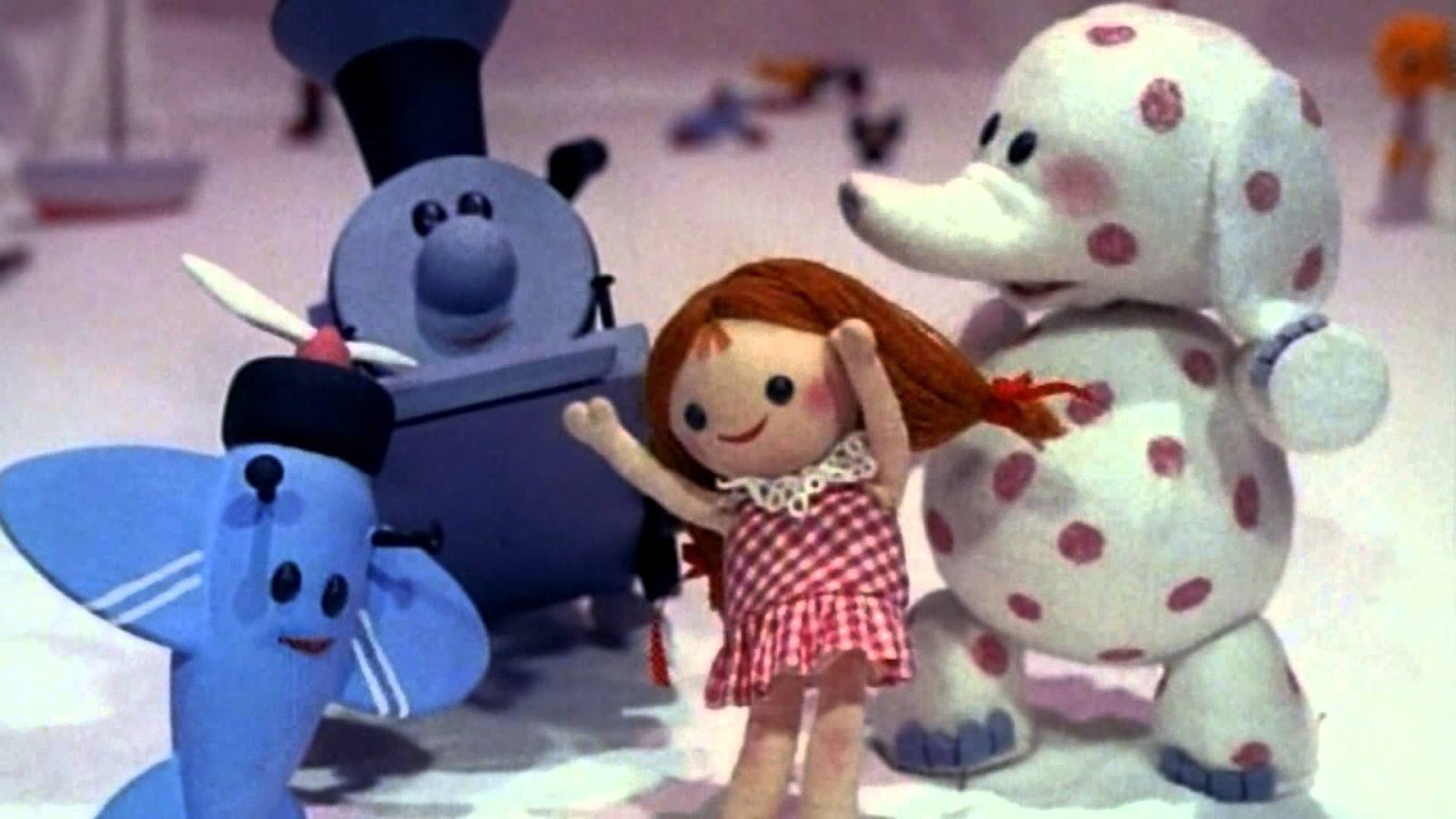
Misfit. Toys. Misfit. Toys. "Misfit Toys!" Marley, Clarence, and Jordan exclaim as one. "Even Kris would approve of that idea," Jordan confirms.


With a group swipe of the CloudVision monitor, the merry gang envision a new future for misguided misfit Mr. Sawyer. He is brought to the Island of Misfit Toys, where the citizens--recognizing his natural gift for materials identification and impulse to fix broken things--name him their Wizard of Refurbished Toys, Deluxe. Times being what they are, he accepts the job.


As the thunderous cheers subside, Jordan returns with his direct reports to Marley's cloudy office, pondering their next mission. As Clarence has noted, there are so many souls left behind in this special time of year. Whom shall we save next?

A face begins to take form in the CloudVision screen. Clarence and Marley anxiously wait to see who it might be... The face is youthful, freckled, and oddly vicious looking.

Clarence gasps. "He has yellow eyes! So help me God, yellow eyes!"

Marley laughs. "Tag, Scut Farcas! You're it."

The End.

Love, hosaa
Repurposing plots


Saturday, October 10, 2015

"Where Is Love" and "The Touch of Art"

Time to catch up again.

The last two performances I saw at Round House Theatre had nothing to do with each other; one was produced by Adventure Theatre MTC, the children's theater training camp at Maryland's Glen Echo park, and the other was RHT's entry in the regionwide Women's Voices Theater Festival. And though they had nothing to do with each other, Oliver! and Ironbound had more in common than the latter did with another WVTF entry at Ford's Theatre, The Guard.

[I interrupt this brief recap to report another RHT-hosted production I saw a few days before Oliver!, evidence of which is a xeroxed list of the 11 "clumps" of one-minute plays in the obviously named One-Minute Play Festival. The audience seemed to be composed mainly of authors of the 50 or 60 "plays," who laughed and cheered noisily in support of each other's art. I can recall almost none of this now, not even the date of the production, which failed to make it onto the one-page info sheet.]

Adventure Theatre's Oliver! happened to be my first exposure to the stage version of one of my all-time favorite movie musicals. My 12 1/2 year-old within is still in love with Jack Wild's Academy Award-nominated performance as the Artful Dodger, so my biases on movie versus stage were pre-formed. I loved the dancing in the AT show, and I thought the little actor playing Oliver (Franco Cabanas, per my program) had a gorgeous voice. The failure to cast a like-sized Dodger, as in the movie with Wild and Mark Lester, proved a big disappointment to me, and their voices never blended in that chummy way they should.

The next RHT production, season-opening Ironbound, was a world premiere play by Martyna Majok, focusing on the struggle of a single immigrant mom, statically positioned at a bleak New Jersey bus stop, poised between failed romances.

As far as women's voices go, this was one I couldn't really relate to, and it was yet another one of those stories about people I simply don't want to spend time with. Yet, upon further review, I found the story had a lot in common with Oliver!. Like the orphan begging to be fed more of even the worst gruel, ironbound Darja (Alexandra Henrikson) hungers. That ill-defined hunger exposes her to a cruel lover or two, a cruel life, and a cruel yearning, "Please, sir, I want some more."

I think what Darja wants is to matter. Her "where is love" plea is a demand for respect. Things seem to turn around for her when she meets her own "Artful Dodger" in the form of a random kid (William Vaughan as Vic), who finds her at the bus stop one night, badly beaten up, and reaches out to help her.

Ironbound's William Vaughan and Alexandra Henrikson. Photo by Cheyenne Michaels, RHT/Facebook


Moving along on the Women's Voices series, The Guard actually had less to do with "women's voices" and turned out to be the kind of play I wish I could write: witty, touching, philosophical, a portrayal of what art means to us (me). It was a bit smutty, though, so I'm happy to leave it to more sophisticated talents.

Playwright Jessica Dickey's story starts and ends with a museum guard (Mitchell Hébert) goaded into touching Rembrandt's painting, Aristotle with a Bust of Homer.

The Guard's Mitchell Hébert, Katherine Tkel and Josh Sticklin. Photo by Scott Suchman, Ford's Theatre/Facebook

This "touch" takes us back in time to Rembrandt's (Hébert again) daily life, and then further back to Homer (Craig Wallace) complaining about people wanting to write down his poems. They're meant to be heard, he says, so people can zone out if they want (says Homer/Wallace, glaring at the audience). Back to the guard's present, he has been fired for touching the art. He then devotes himself not to art, but to life, caring for his partner (Wallace again), a dying poet, tenderly touching his head as Rembrandt's "Aristotle" touched the bust of Homer.

love, hosaa
touched by art

Wednesday, August 26, 2015

Haiku: Season's End


Barker's voice grows hoarse,
carnival rides shake and sieze.
Help Wanted: Grown Ups.

Sunday, June 28, 2015

Diary of a Mad Gogol

It's been a while since I've read one of my 19th-century Russians, and normally I would go for any Dostoevsky or Tolstoy I hadn't read yet (or reread lately), but there was something about Gogol that was gnawing at me.

I'd read Dead Souls a number of years ago, or at least most of it. I'd had the 1961 David Magarshack translation sitting patiently on my shelf, and I really enjoyed it up until I started seeing things like [Here ends the manuscript of the first four chapters of Part Two] and [Part of the manuscript is missing here]. There had been no indication on the cover of the book that I was about to embark on an unfinished story. I see by my old business-card/bookmark that I didn't even make it all the way to the end of the incomplete manuscript.

Yet, Gogol, I felt, was a master satirist, storyteller, scene maker, and character analyst. I'll put him ahead of Chekhov anytime for the sheer joy of reading. But I had a little bit of a Gogol block years ago when I took up my thrift-store 1960 Andrew R. MacAndrew story collection. It opens with "The Diary of a Madman," which so happens to begin on my birthday. I took it as an evil omen and threw it across the room.


Recently, a scholar among my friends was talking about the significance of particular dates used in texts. I decided to conquer my Gogol superstition and take up the Madman's diary again. It was hilariously disturbing.

As the protagonist inexorably slips in and out of delusion, from his conversations with neighborhood dogs to his revelation that he is the king of Spain, his diary-dating system reflects his growing madness: From October 3, he goes as normal through the end of December, then abruptly finds himself in Year 2000, April 43; then Martober 86, between day and night; then No date. A day without a date; Faubrarius the thirtieth; 25th date; and finally da 34 te Mnth. Yr. yraurbeF 349.

The other short stories in the collection capture the absurd, dream/nightmare-like frustrations of civil servants and petty functionaries in Russian life. "The Nose," in which a man's proboscis escapes his face and literally takes on a life of its own, is as surreal as anything you'd find in Kafka.

The MacAndrew collection ends with the something-completely-different historical romance of "Taras Bulba," which I was vaguely aware had been a movie with Yul Brynner. Set in the 17th-century Ukraine's Cossack battles against the Poles, Tartars, Catholics, Jews, and other infidels, this novella contains a great deal of manly violence, drunkenness, and treachery.

It also contains some of the richest expository writing you'll find, and the loveliest treatment of romantic love as Taras's younger son, Andrei (Tony Curtis in the movie), is enchanted by a Polish general's daughter:
But neither chisel nor brush nor the mighty word can express what may be found sometimes in the eyes of a woman, any more than they can convey the storm of tenderness which sweeps over the one those eyes are looking upon.
Not bad for a writer who supposedly never had love in his life.

love, hosaa,
back from a 19th-century view of the 17th-century steppes

Wednesday, June 17, 2015

Cheers, Edward Duke

For Edward Duke, who would have been 62 today.

from The French Lieutenant's Woman, with Jeremy Irons
Love, hosaa
singing his praises, toasting his memory