Thursday, February 13, 2025

Lensing Test

 The sole point of this post is to use Google Lens to try to identify some of the birds and blooms I've photographed over the years.

"Crosswalks": Published by the Washington Post, print (Sept. 5, 2025) and online https://www.washingtonpost.com/dc-md-va/interactive/2025/post-local-newsletter-reader-submitted-photos/


Ageratum houstonianum, commonly known as Floss Flower or Blue Mink, according to Google Lens AI.


possibly Northern Mockingbird


Water lilly


Blue Jay


American robin


possibly a black squirrel with genetic [or environmental] defect

Conclusion: Google Lens is of limited value if it can't be more specific in identifying the stuff in my pictures. Also would need to upload everything to this blog, because Google Lens doesn't work on Facebook. At least not on my phone. 

Correction: Google Lens does work on FB and IG, but only on my laptop, not my phone. And I have to not mind it sending my page to Google. That's life.


bottom-to-top: roses, Canterbury bells, asters


Added 3-29-25, neighborhood walk:

Magnolia, Black Tulip (New Zealand)

Sprenger's Magnolia (China)

Magnolia

Magnolia kobus (Japan)

Forsythia (Korea)


Madonna Lily

Sweet William

Daisy

Chrysanthemum

Chrysanthemums


Daisy family, Chrysanthemum morifolium

Pansies

Kwanzan Cherry blossoms

Eastern Redbud

Phlox

Pansies


Snapdragons (yellow) and larkspur (purple and white)


The green ones left and right: Peruvian lilies. Bright pink in the middle is a carnation [originally identified as a peony]. Yellow rose, white daisy, sunflower, and purple sea lavender.

 
Snapdragons (lower left) and charmelias. Blue bottle: prosecco (previously enjoyed)


Lilies (yellow), zinnias (orange, magenta), stock (purple)


Tuesday, December 31, 2024

2024 Books I Read, and other stuff

Shakespeare once again dominated my reading schedule, and not just because I can read a play in an afternoon. For the record, this year’s plays were Macbeth, Merry Wives of Windsor, Comedy of Errors, and Much Ado About Nothing. There is also some Shake-related nonfiction in the 2024 list, a little on the academic side but worthwhile reading nonetheless.

Notably, this year’s list is shorter than in past years, though I did dip into some short story and poetry collections. I blame my fractured vision (cataracts) and attention span (Olympics, college reunion, comedy improv with Clay Aiken). Here’s my year, in roughly chronological order:

1. The Razor’s Edge, W. Somerset Maugham (fiction; re-read). Not the only first-person autobiographical tale on the list, but not by design. I’d read this many years ago and remembered liking it, but couldn’t remember why. Philosophy, I guess: A nonmaterialistic hero wants everyone to be happy. I like that.

2. The Brothers Karamazov, F. Dostoevsky (fiction; re-read). More psycho-philosophical fiction. Handy to have class notes in the margins of my college-days paperbacks so I could continue underlining themes and significant passages. I seem to have a fondness for the nonmaterialistic hero who wants everyone to be happy type. Note: this list only takes me through March. Slow reader with distractions.

3. Sense and Sensibility, Jane Austen (fiction; re-read). Hm. Curiously unambitious choices so far. I usually like to mix things up. Jane’s first story probably could have used some paring of extraneous characters, as I much prefer the Emma Thompson script. But it’s far more sophisticated and engaging than …

4. Mount Vernon Love Story, Mary Higgins Clark (fiction). George and Martha Washington as Hallmark Channel love interests, a bit too “she gazed into his soft gray eyes” for my taste. Blech. Still, it seemed sufficiently well-researched to merit becoming a nice giveaway to new donors to the Mount Vernon Ladies Association, a very worthy cause.

5. Modern Ethics in 77 Arguments, Peter Catapano and Simon Critchley, eds. (philosophy). Apparently a collection of New York Times columns, though I suspect the readership and the authorship were the same demographic. I skimmed through the topics that interested me—morality, religion, race, women, the future. There was something in the discussions about women that annoyed me when I read it back in April, but I’m too lazy to re-read that stuff. Much, much more interesting is …

6. An Unfinished Love Story, Doris Kearns Goodwin (history, memoir). Doris specializes in writing about the great men of American history, but here she truly makes a case for the historic greatness of her own husband, Dick Goodwin (Kennedy speechwriter best known to some of us as the guy who went after the Quiz Shows back in the day). And like Doris’s stories of other American heroes, she does not forget their ladies—in this case, herself. So you say you want a love story? This is it! Now I wish she’d write that George and Martha thingy.

7. Ocean Breathing, Barbara Mathias Riegel (fiction). I admit I bought the book because a dear friend’s mother wrote it. I like to be supportive, and the story takes place in our familiar neighborhood. The first-person narrator is dealing with severe anxiety, which she only begins to overcome when other people’s problems supersede her own. A less-than-gentle therapist (or reader) might say “Get over yourself.” She does.


8. Shakespeare’s Language, Frank Kermode (literary studies). Survey of how Shakespeare’s command of language (metaphors, motifs, and stuff like that) matured from play to play and advanced the English language along the way. Maybe a little academic, but like Shadowplay (a survey of the plays through the lens of religious and political conflict), an interesting way to review the plays and Shakespeare’s greatness.

9. The Code of the Woosters, P. G. Wodehouse (fiction; re-read). Speaking of a master of language! Not that Wodehouse advanced the English language itself, but he sure had fun with it.

10. Philippe Halsman: A Retrospective (photography). One of the great portraitists of the 20th century, showcasing some of the greatest personalities of the time. Yes, we like looking at celebrities. Halsman made them jump for him. Literally.

11. David Copperfield, Charles Dickens (fiction, though likely autobiographical). A first-person narrator reflects on his life, and it’s a ripping yarn. There are people! Things happen! It’s how I can get through an 800 page book gladly, whereas with some remembrances-type fiction I can’t get through four pages (I’m looking at you, Proust and Joyce).

12. Shakespeare’s Sisters, Ramie Targoff (literary history). Okay, it got a good review in The New Yorker and it had Shakespeare in the title, so I bought it. Targoff covers the work of four key women who wrote at the same time as William but were not in fact related to him. Well worth reading, but I’d quibble about the book’s title.

13. Headlong, Michael Frayn (fiction). Art history in a comic mystery! What a fun book.

14. The Bully Pulpit, Doris Kearns Goodwin (presidential history, biography). While Teddy Roosevelt made the cut for Doris’s top four presidential leaders (with Lincoln, FDR, and LBJ), the well-liked and judicious William Howard Taft had a lot going for him. Another one of my heroes who wants everyone to be happy? Despite their epic rift, Doris gives William and Teddy a happy enough ending to make me cry. (Also sobs-inducing, the Titanic death of Archie Butt, their mutual friend and security man.)

15. Circe, Madeline Miller (fiction). A “Wicked”-type retelling of familiar myths from the witch’s point of view. Richly rendered language thick with metaphors and similes, if you like that. I did.

16. A Christmas Carol, Charles Dickens (ghost story). Rereading this every year might become a tradition for me, along with watching as many different versions as possible (from Magoo’s to Patton’s, er, George C. Scott’s). There is no perfect rendering of the story, however, other than Dickens’s. They all leave something necessary out or put something unnecessary in. And I think Scrooge was really more indifferent than angry or hostile. Scott’s rendering of the character wins on that point.

Confession: I broke my rule this year about finishing everything I started to read. As mentioned above, I couldn’t make it into Proust’s Swann’s Way, for its lack of characters and actions. This is also the reason I couldn’t make much headway into 2025 from the old Coates & Jarratt futurists shop. I spent a career making futurists’ writing accessible to nonfuturists. The book’s many scenarios of new technologies and future problems were devoid of any human beings doing anything. I just couldn’t take it.

The real 2025 looks promising, bookwise: I spy James by Percival Everett at the top of the pile!

Love, hosaa

Happy New Reading

Monday, June 17, 2024

Haiku Redux (for Edward Duke)

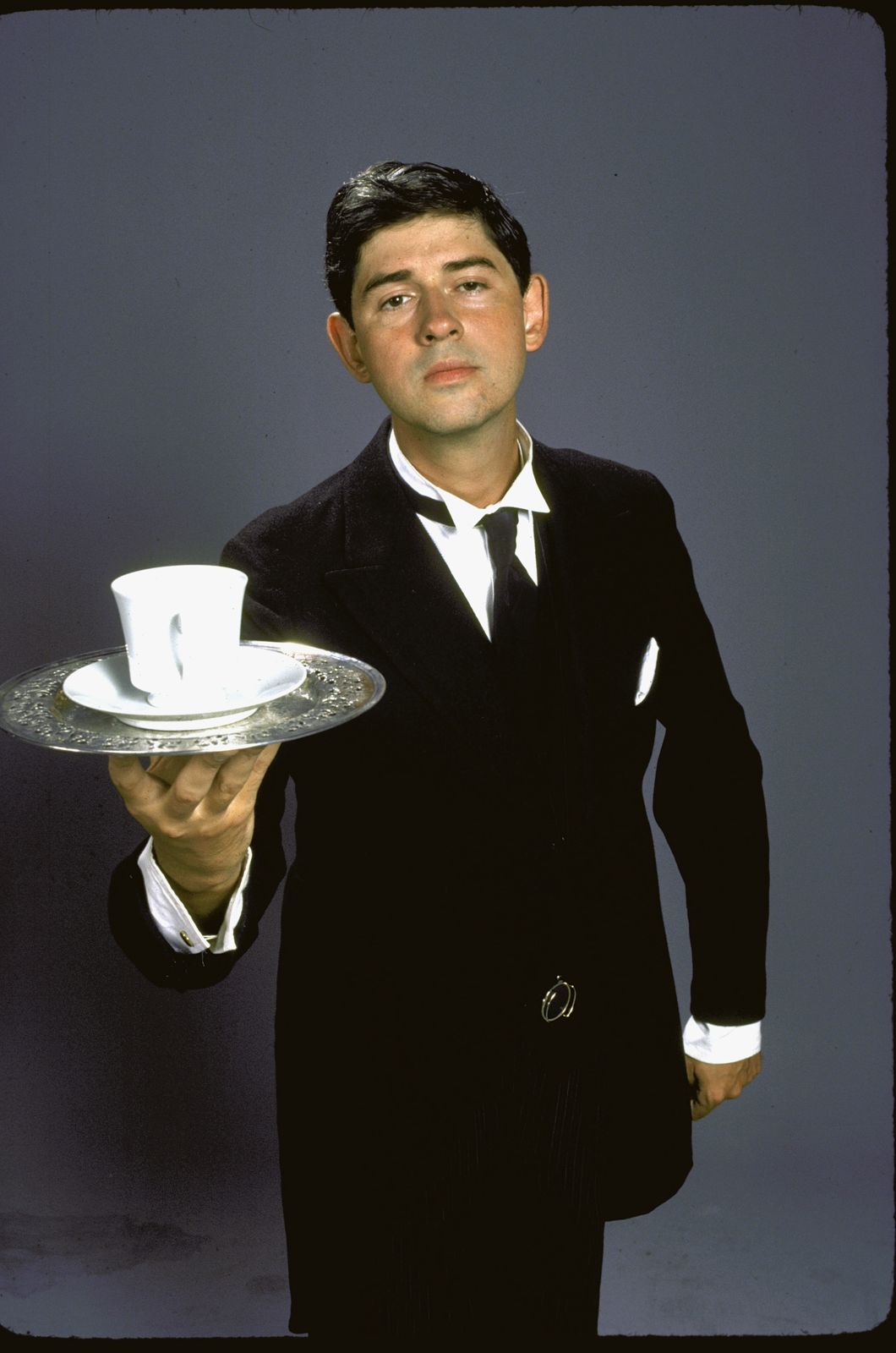
 This bit was from 10 years ago, but it summarized Edward Duke and his  show, "Jeeves Takes Charge":


Edward Duke
June 17, 1953 - January 8, 1994

Slow tap-dance, quick change,

a heart full of joy.

His limited engagement.


Martha Swope, photographer; Billy Rose Theatre Division, New York Public Library Digital Collections, 1983.


Monday, June 3, 2024

No Love

I sought “Love” in poetry encased 
in volumes long collecting dust
and realized, as I must, it would be unjust
to quote their thoughts
as though they were my own.

No love but my own will I ever know, 
if I ever do, but I know

your own vision lengthened when you met:
past, into one another’s experience;
future, into new destinations;
inward, into empathy beyond words;
outward, to worlds beyond a lonely reach.

Love that keeps you close will take you far.
No love leaves a heart that lives in “We Are.”


(for Rachel and Derek, May 9, 2024)

Wednesday, April 10, 2024

Window Visitors

The ladybug made

no sound but her wings' whisper

as the mourning dove moaned.

Tuesday, February 13, 2024

Arise, Jeeves!

Normally I’d only reminisce about Edward Duke on the anniversary of his birth (June 17), but ‘tis the season of my “Jeeves” reflections, ignited this year by the spectacularly long-overdue revival of Edward’s Jeeves Takes Charge stage frolic. 


At the time I saw it, JTC was billed as a “one-man, two-act, 12-character, award-winning comedy tour de force.” Now, the new adaptation lists 22 characters, managed nimbly (I imagine) by Australian heartthrob Sam Harrison in three sold-out performances, February 11–12, at London’s Theatre at the Tabard, Chiswick.

Sam Harrison

It is thanks to the P.G. Wodehouse Society of U.K. (and X/Twitter knowing all about my interests) that I discovered this revival. Following all the rabbit holes of social media, I also discovered that Edward’s   IMDb page had been (lovingly, respectfully, and I assume accurately) updated. 

The biggest treat of all was discovering the archive of original publicity photography for Edward’s “cheap little show” when it landed at New York’s Roundabout Theatre in 1983. 

Only a sample here; credit to Martha Swope, photographer; Billy Rose Theatre Division, New York Public Library Digital Collections, 1983.


Edward Duke as Bertie Wooster
    
Edward Duke as Jeeves

Saturday, December 30, 2023

Books of My Year, 2023

It was a big year for my Shakespeare reading, only coincidentally because it was the 400th anniversary of the publication of the First Folio. Sundays are always good play-reading days, but I decided at one point to binge the Henrys.
Part one (Spring): Richard II; Henry IV part 1, part 2; Henry V
Part two (Fall): Henry VI part 1, part 2, part 3; Richard III

This is about the extent of my English history, so I’d guess Henry V was pretty much the best king. Also, in Shakespeare’s world, Joan of Arc was a villain (HVI-1). It’s all about perspective.

In addition to the books listed below I read a few magazine stories and poems and, less aesthetically pleasing, reports via PDF (to wit: January 6 Committee, USA v DJT). 

Unlike past years’ readings, I didn’t love everything here. In fact, a couple of things made me question how and why I majored in English (specifically the poetry and prose of Hart Crane, which I didn’t finish). I simply don’t have the mind for high, literary poetry. If I don’t know what you’re talking about, is it really all my fault?

That said, here’s what I read (omitting the PDF reports and stray stories and poems), roughly in chronological order:

  1. The Sky Is Not the Limit (memoir) Neil deGrasse Tyson. Life as a smart, successful, charismatic Black man in America. Perspective matters even when your eye is on the sky.
  2. Romeo and Juliet (play) William Shakespeare. I still think Juliet should have left with Romeo that night.
  3. Living (screenplay) Kazuo Ishiguro. My favorite novelist. The film was quietly moving, emotionally restrained yet draining, like Ishiguro’s other tales. I’d read somewhere that the source material he adapted drew from ...
  4. “The Death of Ivan Ilych” (short story) Leo Tolstoy. Sociology of ambition and frustration. 
  5. Howard’s End (fiction) E. M. Forster. Liberated women and the men they try to save. 
  6. America’s Presidents (biographical portraits), National Portrait Gallery. Good historical primer. As I learned in the Chernow history below, Washington had lots of portraits done. Lots.

  7. The Philosopher’s Stone (quantum physics?) F. David Peat. Oh dear. I loved his other book, Einstein’s Moon. This one went totally over my head, and not in an inspiring, “look up at the sky” way.
  8. Common Sense (political philosophy) Thomas Paine. Very witty. Interestingly, he had no love for the Quakers.
  9. Come Looking (poetry collection) Dan Johnson. I still like the one about the Tastee Diner, but the rest made me want to turn in my English B.A. Huh?
  10. Shadowplay (Shakespearean history) Clare Asquith. Was Shakespeare a propagandist trying to persuade Elizabeth I to go easy on the Catholics? Persuasive survey of the plays in the context of religious, social, and political history.
  11. Utopia (political philosophy) Thomas More. Much like Plato’s Republic, and all “utopias,” really, it’s about structuring the irrational human condition. Is order better than just learning to deal with chaos?
  12. The Gentleman Poet (Shakespearean fan fiction) Kathryn Johnson. An enjoyable romance with Shakespeare himself popping up in a Tempest-like milieu.
  13. Ten Great One-Act Plays (theater) Moliere, Chekhov, Shaw, Williams et al. Since my copy is apparently from my college days, I recognized rereading the one I’d been assigned to perform in class, "Something Unspoken” (Tennessee Williams). I had no idea at the time it was about lesbianism. I guess I’ve always been clueless.
  14. Alaska (travel) Bern Keating, National Geographic Society. It’s a nicely written and photographed travelogue from the 1960s. Educational, too. Did you know Alaska is both the Eastern-most and Western-most U.S. state? 
  15. A Lesson Before Dying (fiction) Ernest J. Gaines. Endurance and dignity. Much in common with the deGrasse Tyson memoir (above). It’s important to experience the world from other perspectives.
  16. As You Like It (play) Shakespeare. I do get some of the comedies mixed up. This is the one with the forest and the girl says something like, “Why talk we of fathers when there is such a man as Orlando?”
  17. Stuart Little (children’s fiction) E. B. White. Some reading from my niece’s bookshelf. Charming, but the ending left me a bit unsettled. I won’t spoil it, though.
  18. The Time Machine (science fiction) H. G. Wells. From my brother’s bookshelf. Better than the movie. The fact that the machine stays in one place and only travels through time satisfies my notions about how time travel should work. I’d rather do it without machinery, but even Quantum Leap’s brain wave transmissions need an accelerator.
  19. The Curious Incident of the Dog in the Night-Time (fiction) Mark Haddon. Experiencing how someone navigates a chaotic (to them) world. Perspective, once again, matters. 

  20. The Adventures of Tom Sawyer (fiction) Mark Twain. Re-read from very long ago. Huck was the more interesting character, but he’s only beginning to evolve here.
  21. Cradle to Cradle (environment) William McDonough and Michael Braungart. All about how to make the sustainable plastic paper out of which this book was manufactured. Truly the most difficult book I’ve ever had to hold in my hands, heavy, inflexible, exhausting. 
  22. Contemporary American Short Stories selections: “Sex Education” by Dorothy Canfield, “A Shower of Gold” by Donald Barthelme. Both good, but show their age.
  23. Beyond Gender (political memoir) Betty Friedan. The occasion of the book is a report on symposiums Friedan had organized in the 1990s, so a lot of this is quoted material. But the post-feminist point is that the whole battle of the sexes thing that mid-century feminism launched missed the point of what was happening to society and the economy. Women weren’t taking jobs from men; corporations were hiring more women so they could pay their workers less. Follow Robert Reich on X/Twitter now. Same thing Friedan was saying. 
  24. The House of the Dead (autobiographical? fiction) F. Dostoevsky. A deeply humanistic look inside an abominable institution. 
  25. Washington: A Life (biography, history) Ron Chernow. Probably not the best employer, but a damn good leader. 
  26. Around the World in Eighty Days (science fiction) Jules Verne. Spoiler alert: There’s no balloon. 
  27. A Midsummer Night’s Dream (play) Shakespeare. It’s all about getting the right lovers together in the end. And Bottom, who wants to play all parts. Ass.
  28. For Whom the Bell Tolls (fiction) Ernest Hemingway. Far more graphically violent than I was expecting after having read A Farewell to Arms last year. But the writing is so good. And a bit mischievous with all the “obscenity” he’d throw in. The bottom line is that the “bell” tolls for all of us; that’s what ties humanity together.
  29. A Life in the Theater (memoir) Tyrone Guthrie. All the names worth knowing at the time. 
  30. The Drawings of Albrecht Dürer (art history) Heinrich Wölfflin. An opportunity to look closely at how lines create shape and volume.
  31. Two Gentlemen of Verona (play) Shakespeare. It’s all about getting the right lovers together in the end.

  32. Mayday (allegory; art) William Faulkner. Faulkner’s original drawings highlight a special edition Arthurian-type story written for a would-be girlfriend. Do you choose death (fame as immortality) or life (dull, unheroic)?
  33. Here at the New Yorker (memoir) Brendan Gill. All the names worth knowing at the time, but unlike Guthrie (above), Gill comes across as a bit smug. 
  34. Incarnations : A History of India in Fifty Lives (collected biographies) Sunil Khilnani. There’s more to the history of India than Gandhi (and the other lives surveyed here really make you rethink your hero worship of the former).
  35. Remember When (Christmas season stories) Clay Aiken, editor, for Bubel-Aiken Foundation (now National Inclusion Project). Earnestly if not professionally written personal memories, some tragic, some comic, and all relatable and human.
Speaking of nonprofessional writing, again, I’ve collected a few more Wordle-generated “stories." Click to open the image in a new tab and zoom in. Thanks for reading!


Love, hosaa
Maybe I’ll just go to the movies next year.